Developer: Playdead
Publisher: Playdead
Played on: PC
Release Date: July 7, 2016
Played with: Dualshock 4
Paid: $16.90 (Multi-game Bundle)
Following up on the success of their game LIMBO, developer Playdead released INSIDE, another game in the surprisingly extensive genre of, “small child tries to make their way through a big, scary world”. A relatively straightforward puzzle platformer at its core, what makes INSIDE stand out is its gradual descent into horror. As Jacob Geller points out in his excellent video essay “Fear of Depths”, this descent is not just metaphorical, but literal; geographically impossible as it may be, the game constantly sees you travelling down, deeper and deeper, with things getting more twisted as you proceed.
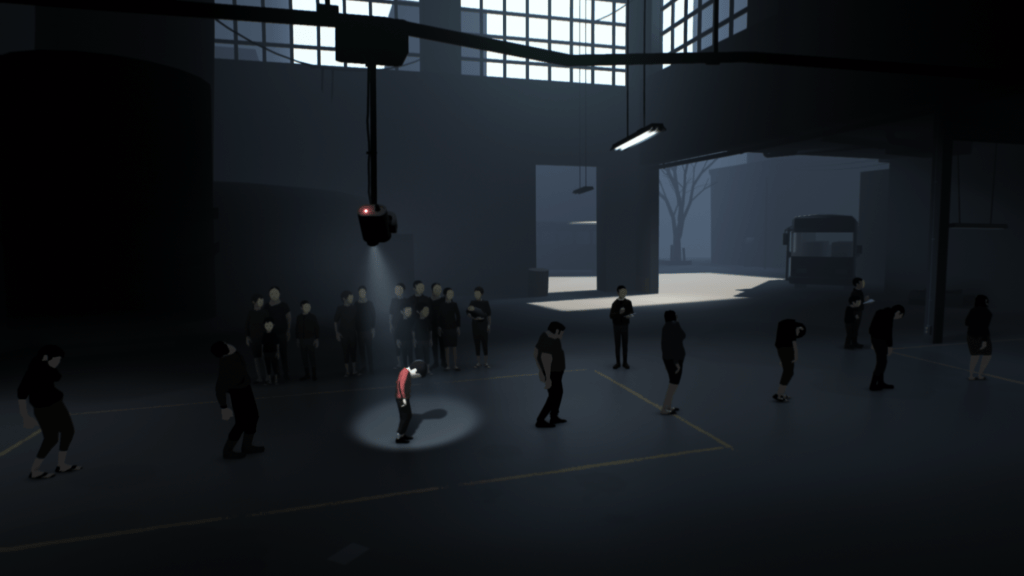
Much like its predecessor, INSIDE starts off in a forest, with the young protagonist sliding down a short slope; the only option is to advance to the right. Continuing on, there are sections where you have to engage in stealth or just flat out run full tilt to escape from mysterious men and their dogs who threaten to tear you limb from limb. The world is cold and merciless, and death comes swiftly if you allow it to. It effortlessly creates a sense of dread, with the sentiment only growing stronger as the boy ventures deeper into an industrial facility and stranger occurrences start to happen. Zombie-like people drag their limp bodies through orderly queues, supervised by more mysterious individuals. Glowing helmets allow the boy to take control of these mindless folk, forcing them to mirror his actions. And all the while, it becomes clear that there’s darker, more nefarious experimentation taking place.
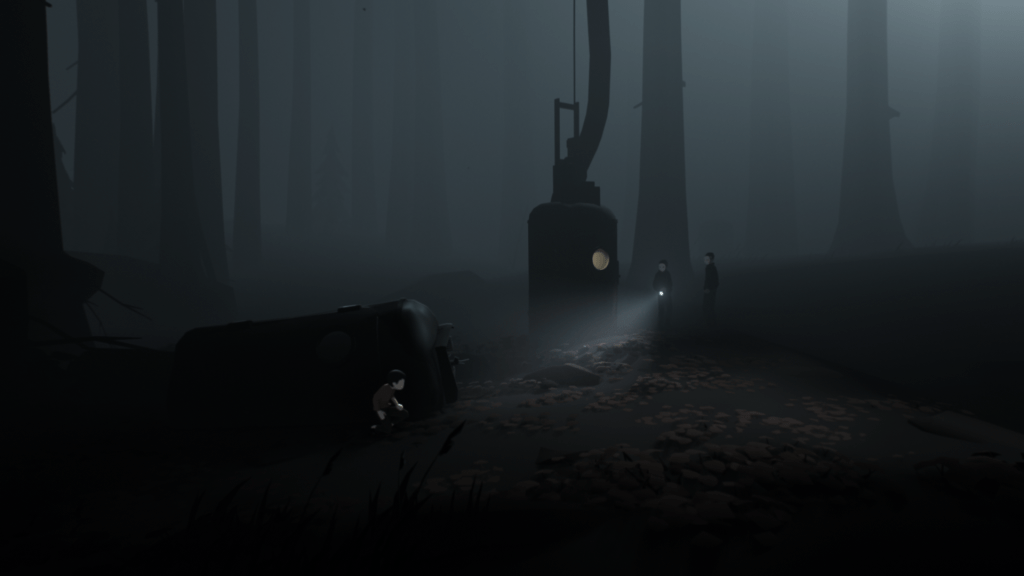
Where INSIDE excels is the way its platforming meshes with the non-verbal storytelling to create a tense, dangerous atmosphere. You want to advance, to see what lies beyond the next room, even if it’s horrifying. Being a sidescrolling game, there’s generally only one way to go, and so there’s an inexorable pull onwards, like pangs of morbid curiosity getting you to slightly open your eyes during the gory part of a film. Yet where things falter is in the puzzle side of the game. I understand the need for a challenge that gets the player to stop and think for a little; otherwise the game would probably be over in less than an hour. However, it’s in these moments where the tension all but evaporates as INSIDE becomes very mechanical. A creepy enemy that only approaches when you turn away from it becomes an easily manipulatable NPC; lure them to one side of the room, then run to the other side and swim to freedom as they attempt to catch up. Deaths become more common, and not because you tripped in a frantic chase through the forest, but because you incorrectly thought you could turn a crank one extra time before running to safety, forcing you to retry the same puzzle again and again. The game becomes more stimulating, but less engaging.
These puzzles even threaten to undermine the ending, though I don’t think they succeed. The nightmarish quality of the reveal, combined with some truly stomach-churning sound design mean that it remains an engaging denouement to INSIDE. One part in particular has remained stuck in my brain days after beating the game, just for how disgusting it is. Considering the relative simplicity of the art style, I think it’s a testament to the work done by Playdead on the presentation that the closing section of the game works so well.
And then it just sort of…stops. In fact, I used the term denouement in the last paragraph, but when I first played through, I assumed this section of the game was the climax. But no, there’s one final descent through a forest, and then the game ends with a slow zoom out on a beach scene. Even the secret ending that you get for finding all the hidden objects and entering a secret code feels very abrupt. I’m not quite sure what I was expecting; in many ways, INSIDE is a quiet game, and these endings feel in line with that quiet, contemplative tone. But I’d be lying if I said I didn’t feel somewhat dissatisfied with the way things played out.
Put together, this leaves me with somewhat conflicted feelings over INSIDE. Its puzzle elements feel at odds with the atmosphere it so expertly crafts, and its endings leave something to be desired. And yet, there’s just something magnetic about it. Maybe it’s the fact that even with the occasional tricky puzzle, it still clocks in as an experience that could easily be beaten in a sitting or two; its brevity keeps the tedium at bay. But I think what’s more likely is that it’s just such an excellent experience. It feels weird to describe a non-first-person game as immersive, but that’s what INSIDE is. It sucks you in with its striking visuals, keeps you around with excellent audio work, and doesn’t leave your brain until long after you’ve finished it. Which to me, is what a great experience should do.
8/10
 Olive's Game Garden