Developer: Frogteam Games
Publisher: Brandon Braun
Played on: Switch
Release Date: January 12, 2024 (Switch)
Played with: Switch Lite
Paid: $15.00 (Backed on Kickstarter)
“What makes a game wholesome?” is a thought that frequently crossed my mind while playing Frogsong. Marketed by Wholesome Games (and featured in their Wholesome Direct) in the lead-up to its release, I assumed going in that I’d be getting a cozy, low-stakes action RPG with a whole lot of cute frogs and toads. While Frogsong does fulfill that, it also has a story that gets surprisingly dark given the setting, challenging gameplay (if you want it that way), and a creepy final boss. All this combined into an experience that kept me more on my toes than the marketing prepared me for, with Frogsong using its wholesome facade as a Trojan horse to tell a heartfelt, emotional story of a land being thrown into (and rescued from) chaos.
That story opens with a little tree frog named Chorus leaving their childhood home and moving to the town of Boreala with the goal of joining the local Defense Guild. Upon arriving, they’re greeted with skepticism and hostility by existing members of the guild due to their small stature. However, the town’s elder, Bufo, looks upon Chorus much more favourably, supporting them in their endeavour. Shortly after Chorus’ arrival, Lord Lithos of the Taural Empire stops in town, declares that a looming threat is coming, and urges the town to become part of the empire in order to be properly protected. Elder Bufo rejects their offer, yet after Lithos departs, rumours begin to spread throughout the land of a monster known as The Snnikt coming to destroy everyone. Bufo maintains that The Snnikt is simply an old war story appropriated by Lord Lithos, but as time passes and more regions fall under Lithos’ control, it seems that the tale of The Snnikt may not be pure fiction.
At its core, Frogsong’s story is a straightforward, “Unlikely hero sets off to fight a great evil,” affair, which was about what I expected, though the greatness (and creepiness) of the evil caught me off guard. What really surprised me, though, was that the story contained moments of genuine emotion, keeping me invested after a somewhat slow start. I cared about the cast of characters, and wanted to see Chorus and their friends succeed. The game even plays a clever trick with its dialogue options, occasionally presenting you with two choices of what to say, but then forcing you in a heated moment to “choose” from only one option. The way it was presented made it feel like it was me saying it, rather than the game, making it all the more heartbreaking to go through. Sure, the actual narrative of Frogsong is a bit generic, but when it’s told this well, I really can’t complain. I was also pleasantly surprised by the game’s LGBTQ+ representation; it wasn’t something I anticipated going in, but it was nonetheless really nice to see.

Adventuring through the world sees Chorus coming face to face with a whole host of enemies, but they’re nothing that a few swings of your trusty sword can’t handle. There aren’t any fancy combos, just a basic attack and a dodge (as well as some bombs that can be unlocked later), but it works well for the type of experience Frogsong is going for. Unfortunately, actually hitting the enemies can be a bit tricky due to the fact that Chorus and their foes have a full range of movement, but attacks only come out in one of four directions, with some spotty hitboxes to boot. There were several times where I’d try to reposition myself during combat, only to end up facing perpendicular to my foe and swinging at thin air. On other occasions, I’d take contact damage from getting too close due to the sword’s limited range. It never became overwhelmingly frustrating, but it left combat feeling decidedly clunky, especially against the game’s more demanding opponents.
Thankfully, failing in combat is made less punishing by the fact that death also restores all the items you used since your last checkpoint, so you never have to worry about running out of healing items if you keep dying on a particular section. Additionally, if you find the combat to be too difficult, you can take advantage of Frogsong’s host of accessibility options, including a companion known as Beetlebud who can attack enemies for you. I do wish they were slightly less aggressive, though. I left Beetlebud on at the outset and frequently found myself unable to get more than a hit or two in before they killed whatever we were fighting. I turned off their attack function after that, but there were definitely times later in the game where I was tempted to re-enable it due to my aforementioned difficulties with the combat system. One such time was the game’s final boss, who loves randomly teleporting around and throwing out attacks that felt near impossible to dodge. Unfortunately, my ultimate victory there ended up feeling more like luck than skill. There is a weapon upgrade system that might have made it easier, but after a couple of initial upgrades, each subsequent one requires salamander steel, and I never found any of it despite thoroughly exploring most areas.
While exploring, Chorus fights a whole host of bugs, but sadly I also had to fight with a few technical bugs during my time with Frogsong. The most serious one saw the game registering false inputs for movement; I’d let go of the control stick and Chorus would set off in a random direction, sometimes walking back out the way they came and leaving an area. At first I thought it was Joycon drift, but I didn’t see the same results when testing in my Switch’s menus or controller calibration. Mercifully, the aforementioned accessibility features include an option to adjust the dead zone for the control stick (as well as tons of button remapping options), and tweaking that seemed to do the trick. Beyond that, everything else was fairly minor: I encountered some frame hitches while exploring larger areas like towns, an NPC I was escorting stopped animating and just sort of slid around the screen, and Beetlebud seemed to choose at random whether or not they wanted to help pick up coins. Also, opening pots placed close to walls sometimes deposited coins in the narrow gap between the pot and the wall, such that I couldn’t actually move Chorus in to pick them up. Overall though, once the control stick issues were worked out, playing Frogsong was a pretty smooth experience.
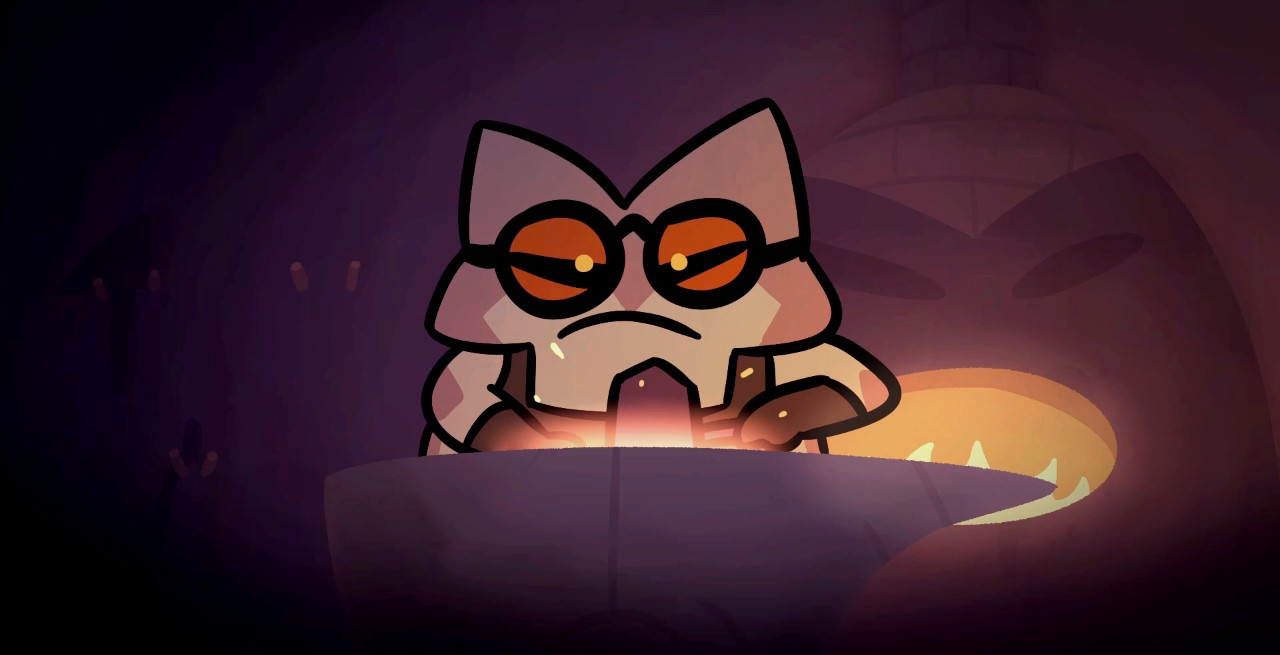
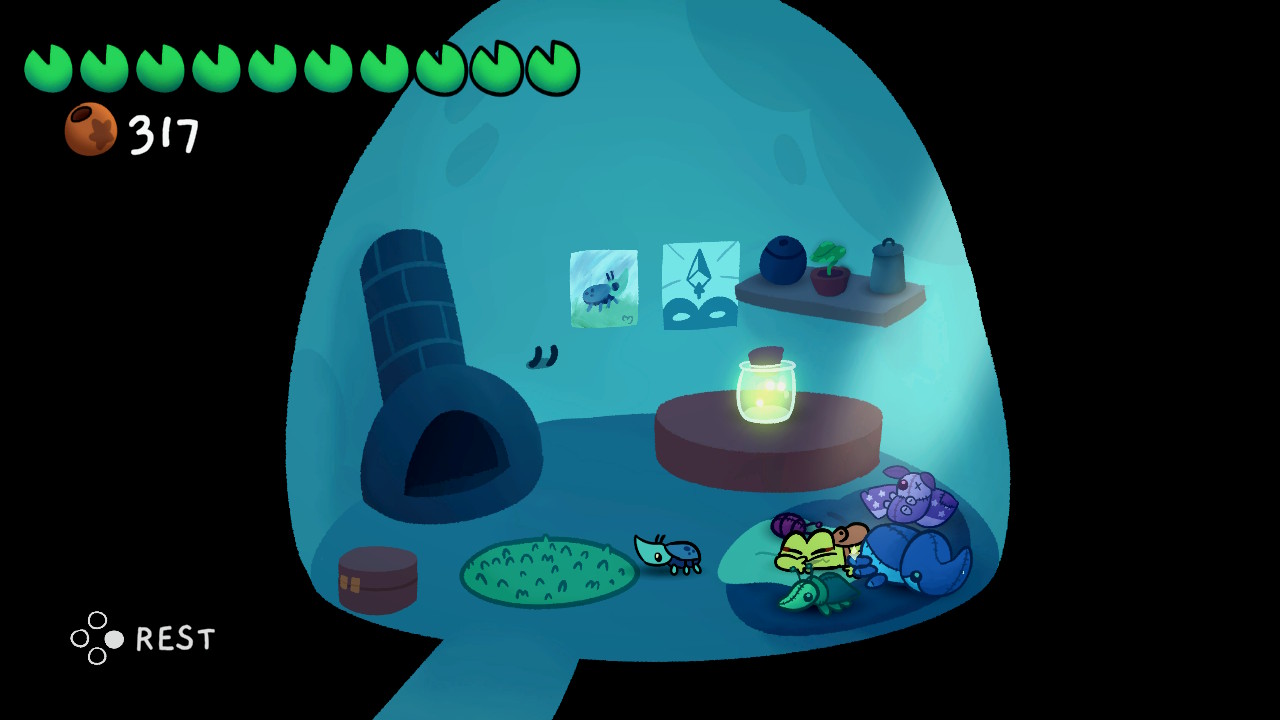
What drew me originally to Frogsong was the presentation, and it doesn’t disappoint. The music is pleasant enough, but the charming animations are what really bring the game to life. Characters all have super cute designs, to the point where even the nefarious Lord Lithos sort of looks like you could pinch his cheeks. Every time you rest at a save point, Chorus curls up for a nap, letting out a big yawn and a stretch when they get up to continue adventuring. There are even some cute cutscenes that play at different parts of the game, all of which made me wish for an animated web series, or something where I could get more than just 30 second doses of the world and characters. Finally, when things ramp up towards the end, the music and animation amplify the creepiness of the final boss, making it an impactful fight, despite my earlier complaints.
I backed Frogsong on Kickstarter two and a half years ago, and it’s been exciting to see its development progress ever since. I was sold on the cute characters and the promise of “a heartfelt adventure where it’s okay to be small”, and I think the game unquestionably delivers on that. It’s not without its hiccups: specifically, I would have loved it if the gameplay experience was tightened up compared to what’s in the final product. But for the four and a half hours I spent with it, Frogsong delivered an enjoyable, and perhaps – dare I say – even wholesome experience.
7.5/10
 Olive's Game Garden