Developer: Ninja Theory
Publisher: Ninja Theory
Played on: PC
Release Date: August 8, 2017
Played with: Dualshock 4
Paid: $15.73 (Multi-game Bundle)
Mental health representation in entertainment media is a bit of a thorny issue, mired as it is in all manner of problematic tropes. Horror properties in particular suffer here. Whether they’re painting the mentally ill as gibbering lunatics in insane asylums or serial killers without a semblance of a moral compass, horror books, movies, and games so often are the place where subtlety and nuance about psychological struggles goes to die.
Enter Hellblade: Senua’s Sacrifice, a game which clearly wants to be a sympathetic, well-informed look at psychosis and how it affects people – so much so that the first names in the opening credits belong to mental health (as well as historical) consultants. And dammit, if any development team should need to front-load their consultancy credentials, it’s Ninja Theory, aka the same folks who (in this reviewer’s opinion) utterly botched their handling of slavery in Enslaved: Odyssey to the West. Of course, then the question becomes: is Hellblade a redemption story for Ninja Theory’s writing? The short answer is: … kinda.
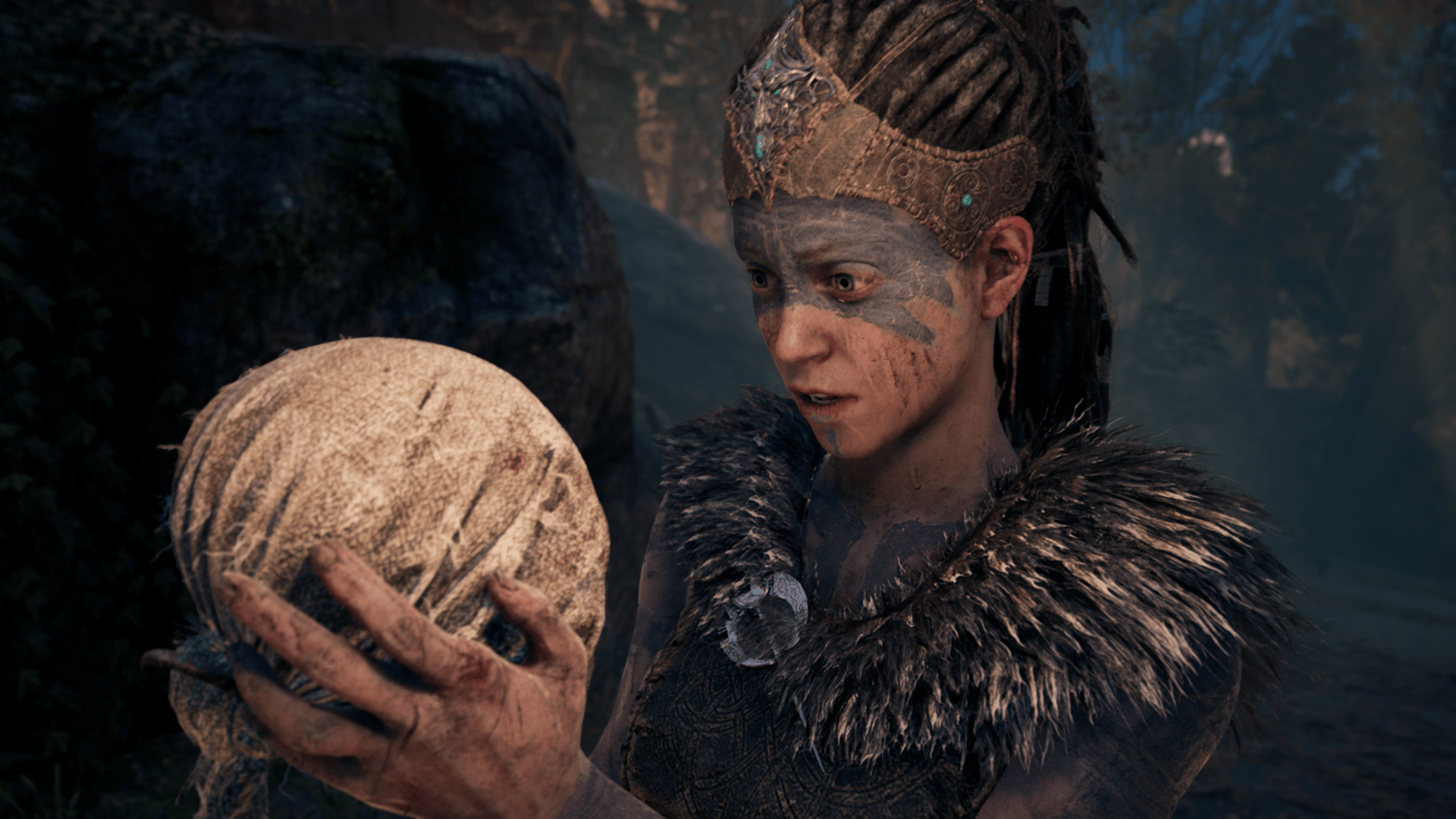
The longer answer requires getting into the narrative writ large, which follows a young woman named Senua as she goes on a pilgrimage to save the soul of Dillion, her lost lover, from Helheim. See, Senua suffers from psychosis, which largely manifests as hearing voices in her head as well as suffering from hallucinations. When everyone turned their backs on her due to her condition, Dillion was there to support her. However, he was ultimately killed in battle, which acts as the inciting incident to send Senua into the unknown in pursuit of his salvation. In addition to her memories of Dillion and the myriad voices in her head, Senua is also accompanied by the voice of Druth, another deceased friend who helps guide Senua through some of the game’s early segments. Additionally, throughout the experience, Druth is responsible for relaying myths and legends to Senua when she interacts with lorestones in the game world.
Hellblade is steeped in Norse mythology, and Druth’s tales of legends like Odin and Baldr punctuate and often parallel Senua’s quest, making it well worth it to explore the world fully to seek out all the lorestones. However, this reverence for myth and folklore does somewhat cloud the representation of mental health disorders. Now, I want to preface this by saying that, mercifully, nobody in my life suffers from psychosis, meaning I’m not in a good position to judge whether the game’s representation of it specifically is accurate or respectful. Supposedly, Ninja Theory not only consulted with experts on the subject during development, but also with first-hand sufferers of psychosis, and so I like to think that the portrayal here lives up to that level of research.
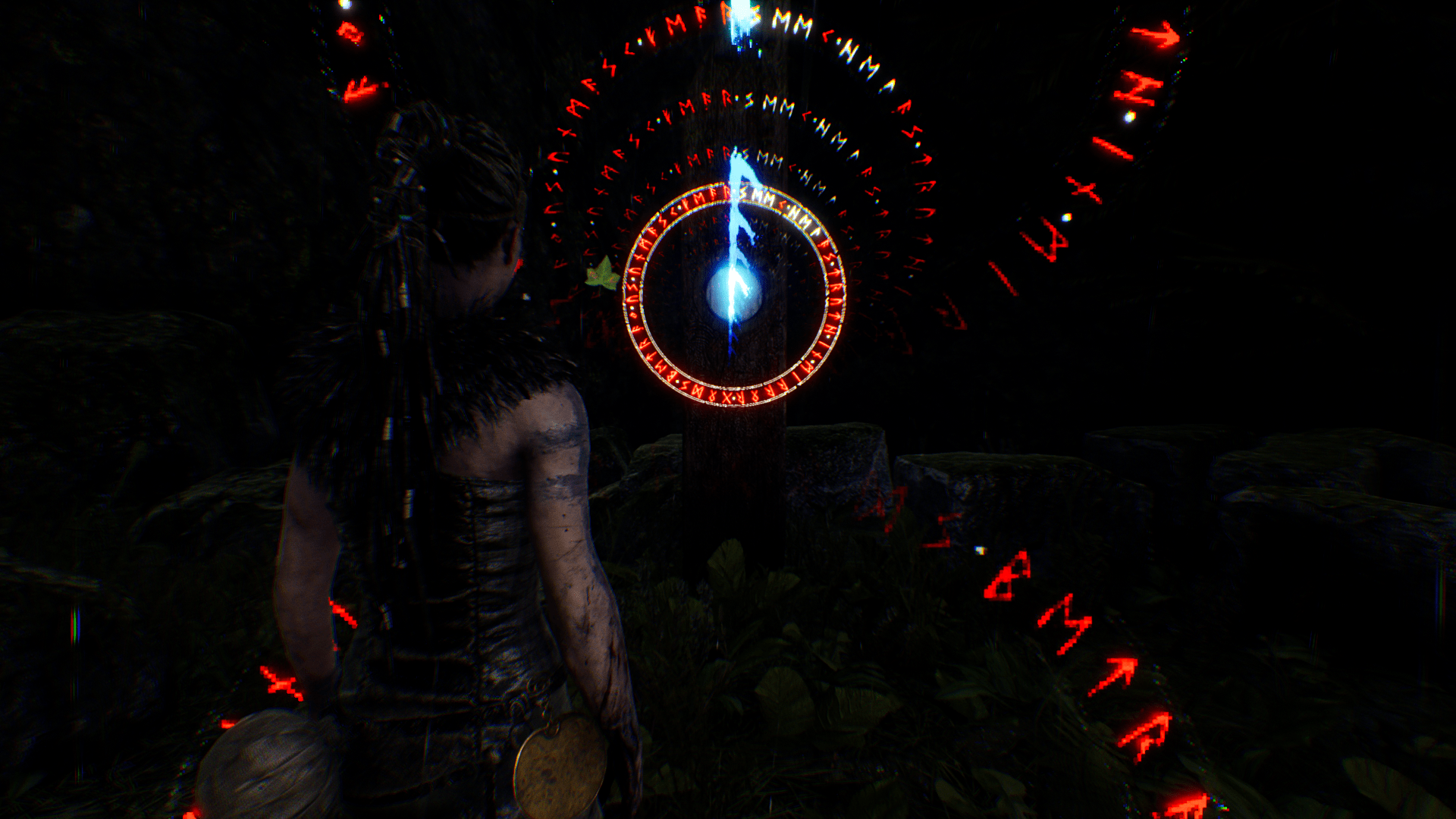
However, what I can speak to is how Hellblade handles mental illness in general, and it’s here where the game stumbles a bit. Basically, without getting into spoilers, there are times where the game frames Senua’s condition not as a natural occurrence she was born with, but as a supernatural curse upon her mind. Personally, I felt that this approach trivialized her struggles, as well as framing mental illness as something inherently corrupt or evil; simply put: it just didn’t sit quite right with me. That being said, I think this may simply be a product of the game’s setting: at the time it takes place, such beliefs were likely the norm, and I can’t fault it too heavily for going for historical accuracy. Also, by the end I think things become less muddled, and it’s clearer that Senua’s condition is not one that will simply vanish once she “defeats the darkness inside” or some other cliche.
Occasional funkiness with the writing aside, the way that Hellblade’s story is told is truly exceptional. For starters, the visuals are stunning. This is a game that came out in 2017 and uses a realistic visual style, yet it still holds up remarkably well, especially when running with the graphics settings maxed out on PC. A major contributing factor is the character models and animations, with Senua herself of course being a highlight. Despite some occasional artifacting around her hair and the fur on her clothing, it can be easy to forget that you’re watching a 3D model talk and emote, rather than a real person. Melina Juergens’ performance really sells things here, along with detailed motion capture work that shows off everything from subtle changes in expression to wild cries of anguish. The only sticking point is that the final area could have used some additional optimization. Sure, there’s a lot going on in it, with statues crumbling and reforming, heavy rain, and tons of enemies, but it’s still no excuse for the game to go from a near-locked 60 FPS to a complete slideshow.
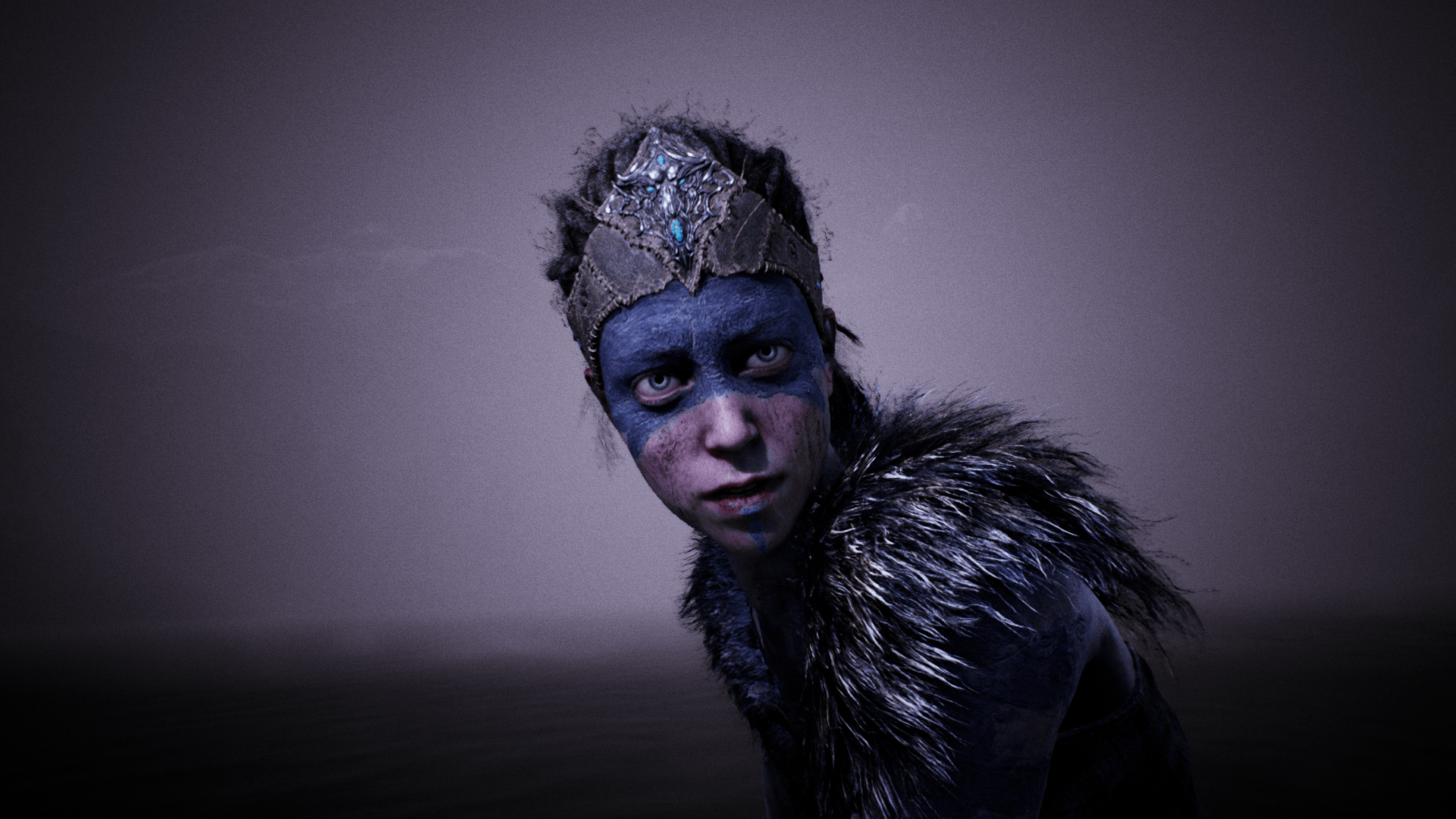
That instability extends to the storytelling, though in a more positive way this time. Senua’s mind acts as an unreliable narrator, and it can really ratchet up the tension or mystery of the game at key moments, keeping the player remarkably off-balance. The voices claimed that my torch might go out during one segment, and I immediately began panicking and moving quicker to find sconces to light, despite not knowing whether that was actually a real mechanism. Similarly, Senua has memories of relationships ruined and dreams shattered, but it’s unclear whether they actually happened, or if it’s just her mind betraying her once more. It really sells you on the whole “hallucinatory vision quest” premise, and I was grateful for how much thought went into making the game as immersive as possible.
Speaking of which, nowhere is immersion as a key component of Hellblade’s design more evident than in its audio. Utilizing binaural audio throughout, it’s well worth heeding the game’s splash screen advice to play it with headphones. To put it simply, binaural audio allows for a surround sound-like experience with a stereo setup; look up samples online if you want to get a feel for it. In Hellblade, this audio technique is utilized to make it feel like the voices in Senua’s head are literally swirling around you; whether they’re informing, warning, encouraging, berating, or belittling, it feels like there’s no escape regardless of where you turn, and it’s an extremely effective use of the technology.

Of course, being a game that’s gunning for such a high degree of immersion also means Hellblade has farther to fall when issues crop up, and unfortunately, crop up they do. For starters, there are no button prompts; you either have to use the pause menu or random button mashing to figure out what the controls are, which is fine on the face of it until you learn there are some things the game just doesn’t tell you. As an example, if you’re knocked down in combat, rapidly pressing the dodge button can allow you to recover; you only go down for good if an enemy lands another blow on you while you’re felled or for a brief time after you get back up. This is never explained, though, which meant that I died really quickly in my first few combat encounters. Again, this would be okay in the average game (nothing wrong with a few retries on a tough fight), but a key story beat in Hellblade involves Senua’s arm becoming infected with a dark rot, which gradually spreads each time she dies. If it ever reaches her head, she dies for good, and you lose all saved progress. To be clear, this added to the intensity of each fight and made me try that much harder to prevail, but it also meant that it would have been really nice to know all my options going in, especially if they could reduce my chances of perishing.
That being said, the rot was so finicky that it was never really clear to me whether it was a genuine threat or just another instance of the game trying to mess with me. There were times where I died and it would show the rot gradually climbing up Senua’s arm, which made me think the threat was real, but then I’d die again and it would play the exact same animation, with the rot starting back where it originally was and climbing the same amount. In another segment this didn’t seem to be an issue and the rot actually reached Senua’s shoulder, but after clearing the sequence and subsequently dying on a later one, suddenly the rot was back at Senua’s forearm. I don’t know if this was because I had the combat difficulty set to “Auto”, or if it was an actual bug, but it sure felt like the latter.

That sequence where the rot reached Senua’s shoulder is actually another sore spot for me, as the only reason it happened was due to a bug that I thought would end up being game-breaking. The goal was to crawl through a tunnel while under a time crunch, but for some reason Senua kept getting stuck at the end, refusing to actually exit the tunnel and ultimately dying. After a few deaths this way, I thankfully decided to try reloading my save, which fixed the issue and didn’t cost me any progress. However, I was thrust into a boss fight upon exiting the tunnel, which killed me almost immediately and, upon respawning, I found that Senua was stuck outside of her combat stance and couldn’t do anything except run around and wait to die. The only problem was the boss couldn’t actually kill her since I wasn’t technically engaged in combat, so again I had to reload my save. It’s things like this that completely broke my immersion, making me less worried about Senua’s plight and more about whether I’d actually be able to finish the game.
There were also Hellblade’s puzzle solving sequences, which reminded me a lot of Superliminal in the way they required looking at things from different perspectives, showing or hiding different parts of the environment, and lining things up to make hidden symbols. Even early on, though, I found myself growing tired of them, and while things did get a bit better as the game progressed, they tended to break up the flow too much; I think this is one of the few times where I would have actually preferred less gameplay.
Speaking of puzzles, I ran into an instance where one of the puzzles seemed to be bugged; I found the necessary symbol to open a door, but then it wouldn’t open no matter what I did. It turned out that the hitbox for interacting with the door was so narrowly defined that I could only trigger the door opening animation by being in front of it and close to it, but not right up against it. It ended up being super fiddly and way too easy to think the game was broken, which I did for quite a while.
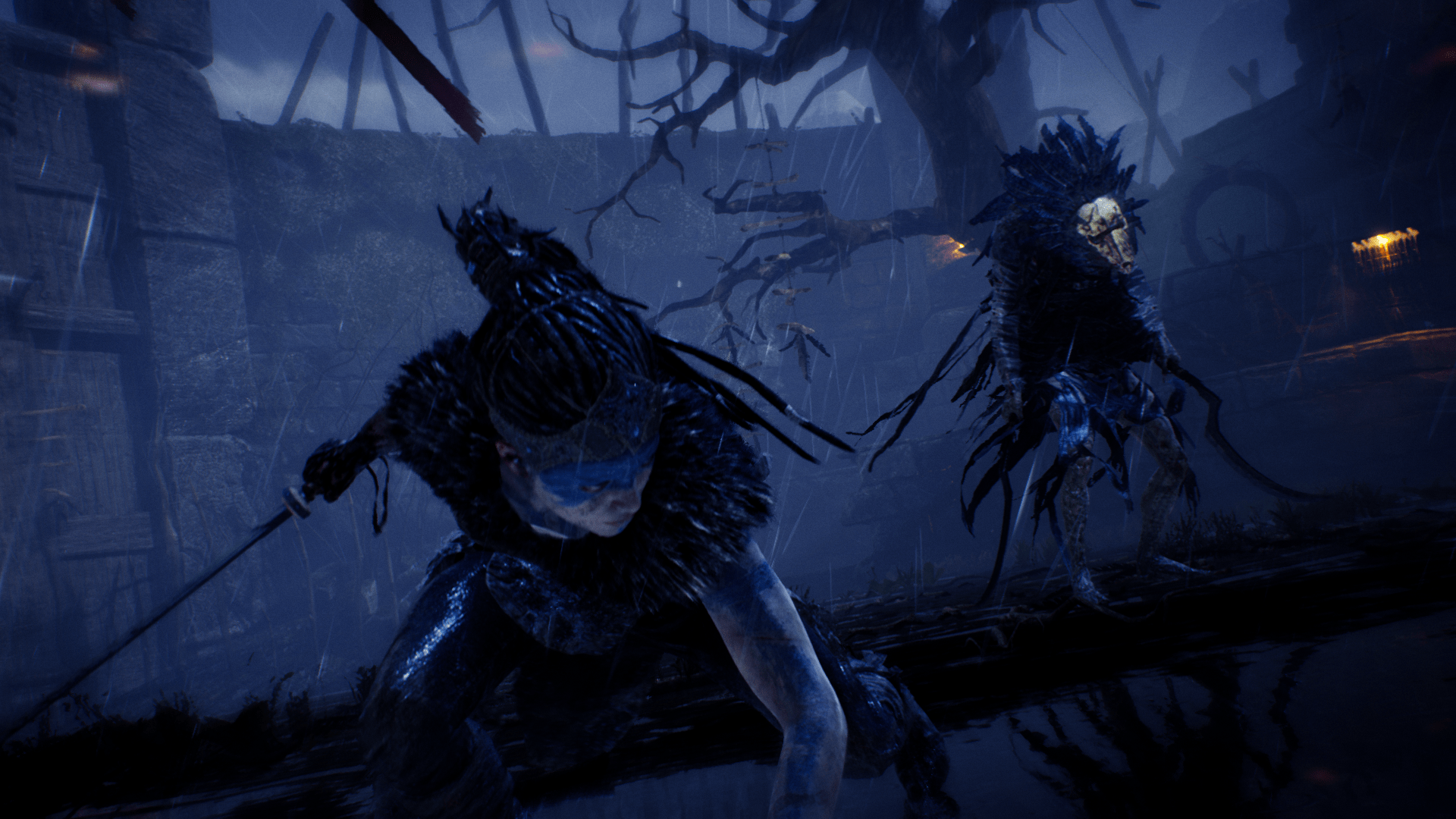
Despite these hangups, I still enjoyed other aspects of Hellblade’s gameplay a lot. Combat can be intense and frantic, often seeing you outnumbered against oncoming Northmen and relying heavily on the voices in Senua’s head to alert her when someone’s behind her. There’s a pretty limited pool of enemy types, but I found there were enough new wrinkles (shields you have to bash through, ethereal foes that have to be focused on to make them hittable, etc) to keep things engaging throughout. There’s also a few boss fights to add some extra spice, and they really required me to lock in and do my best to come out on top. In particular, an early fight against the god Valravn saw me dying several times and ultimately winning by getting the perfect block timing down enough to counter a lot of his attacks; I was vibrating and exhilarated by the end of it.
Similarly, just walking through and exploring each area kept me interested, of course helped by the gorgeous (and at times nightmarish) visuals and atmospheric narration. There are also several sections that vary things up to great effect, whether it’s using the vibrations of your controller and directional audio to navigate a pitch black realm, or dashing between spots of light while pursued by a creature that dwells in the shadows. For such a relatively short game, Hellblade tries a lot, and while not all of it succeeds, I was nonetheless captivated by much of it.
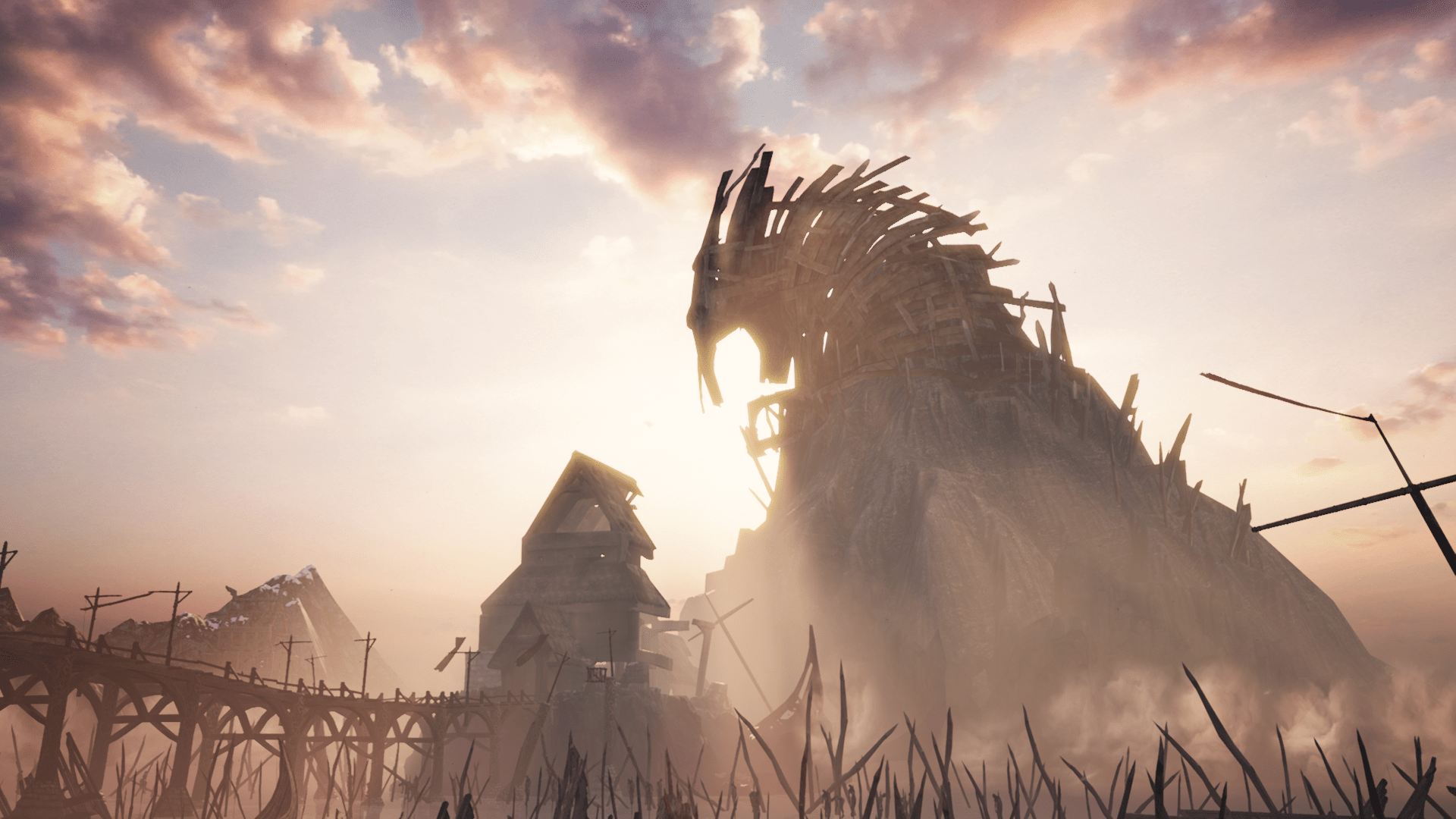
Hellblade: Senua’s Sacrifice is a deeply conflicted experience. One minute it’s awing with beautiful visuals, detailed motion capture, and immersive audio, and the next it’s falling over due to technical issues. It’ll keep you riveted with exciting combat encounters, and then bore with perfunctory puzzles. My overall outlook on it is still relatively positive; I think there’s more here that added to the experience than detracted from it, but the problems do make it tougher to give it a more universal recommendation. It’s a shame too, as while it’s not perfect, I think the game’s depiction of mental health struggles is doing a lot more than most games ever even attempt, and it would be nice if there were fewer technical and mechanical stumbling blocks in the way of experiencing it. If you’re willing to put up with some jank, though, there’s a lot here to get invested in, and I’m already immensely curious to check out how Senua’s story continues in the sequel.
7.5/10
 Olive's Game Garden