Developer: big Loop Studios
Publisher: Snapbreak
Played on: PC
Release Date: February 1, 2024
Played with: Mouse
Paid: $15.73 (Multi-game bundle)
I love a good virtual puzzle box. In reality, they’re wholly impractical devices: complex, expensive mechanisms interlinked with one another that you solve once and then either discard or bestow upon someone else to see how they fare. In the gaming space, though, they allow for layered, multi-stage puzzles that stay manageable due to the simple fact that everything you need to find the solution is right in front of you. You may have to rotate the box, recall an indentation that perfectly fits an item you obtained elsewhere, or recognize that one of the box’s legs looks slightly different from the others, but at the end of the day it’s all there in a contained, isolated environment. I got some enjoyment out of a couple of games in the The Room series on mobile way back when (no relation to Tommy Wiseau’s hilariously disastrous film of the same name), but eventually they started branching out in design directions I was less keen on. So when Boxes: Lost Fragments entered my Steam library, I was particularly intrigued to check it out and see if it could offer a compelling puzzle solving experience.
“Compelling” is definitely the word I would use to describe Boxes, rather than, say, “challenging”. While there were times it gave me pause or I had to rely on the hint system, I was still able to achieve full completion on it in less than five hours. That’s not a knock against it, though; I enjoy a lot of shorter experiences so long as they trade in length for tighter pacing, Boxes excels here. The game is split into five chapters, each of which feature four puzzle boxes that each reward you with an item used to solve a larger puzzle in the level selection hub. This variety means if you’re anything like me, you won’t be stuck staring at the same stumper for too long, and there are a couple of helpful options if you do ever find yourself in that situation.
The hint system in Boxes is quite straightforward, simply highlighting for a limited time what you should be interacting with next. The fact that it’s time-limited is an annoying restriction, considering the rest of the game tends to move at whatever pace the player chooses, but it’s nonetheless a useful feature. There’s also an option to skip a given puzzle altogether if you’re ever really stumped, which helpfully only skips over the current thing you’re solving and not the entire box. Just because the player’s struggling with a particular segment doesn’t mean they want to bypass the entire overarching scenario, so I appreciate Boxes’ restraint here. As for me, a couple of sliding tile puzzles (you know, the annoying ones where there’s a single gap and you just move one tile at a time to complete a picture?) had my cursor inching towards the skip button, but a bit of perseverance got me through in the end.
However, sometimes achieving the solution for an individual puzzle could feel less like careful calculation and more like mucking about until I stumbled upon the answer. In one case, I literally lucked into the solution and couldn’t for the life of me figure out what the intended method of getting there was. It’s possible there was some clue I just missed, but I looked around pretty thoroughly and couldn’t find anything that seemed to indicate otherwise.
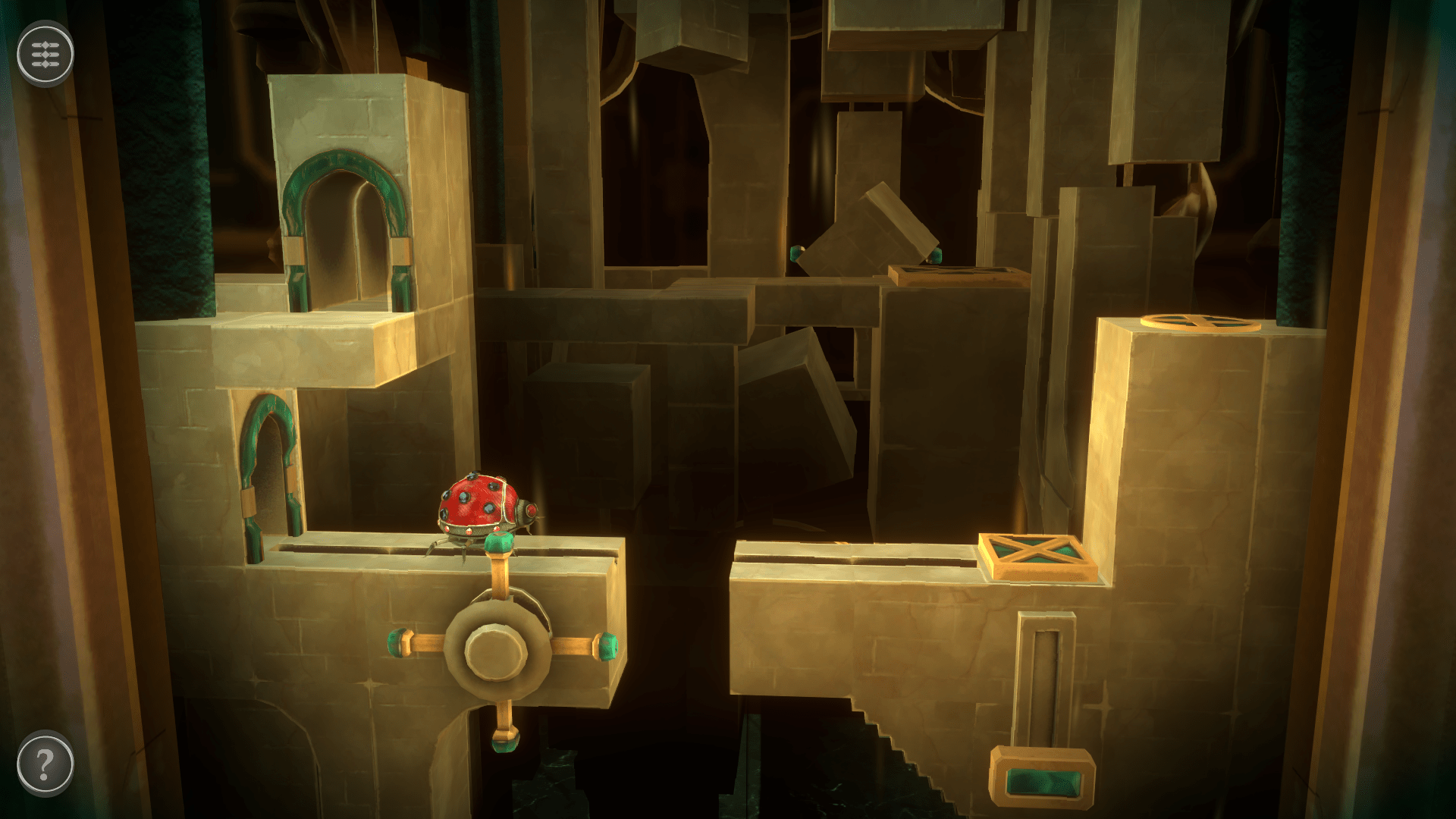
Thankfully, that was the only time I had to solve that particular puzzle, as the boxes in Boxes don’t over-rely on any one particular style, providing a surprising level of variety throughout the experience. For instance, one section required raising and lowering platforms to allow a mechanical ladybug to make its way to an exit, while another involved adjusting dice in a grid to specific values by using buttons that affected entire rows or columns. I never felt bored with the experience, despite some quandaries being more interesting or creative than others. The reward was always worth it too, whether it was the drama of a new panel on the box unfurling or simply a new item with which to interact.
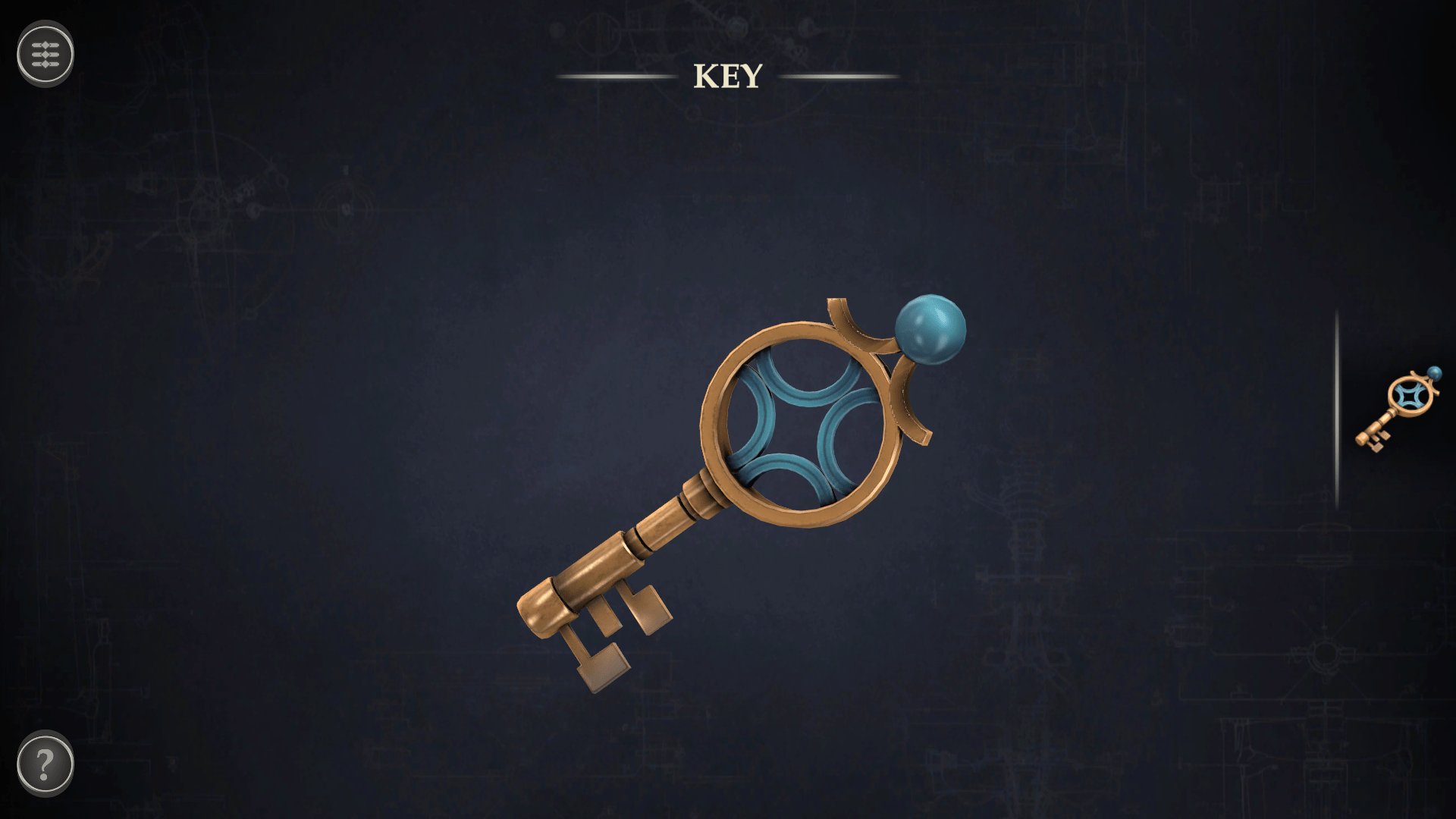
In a clever twist, those items aren’t always usable right out the gate. This can range from keys with individual teeth that need adjusting to fit a lock all the way to entirely new items hidden within a larger object. Granted, this isn’t the first game to have done this by a long shot, but the ease of zooming in on, rotating, and selectively interacting with all the items you acquire is still a nice touch. It got to the point where I’d often end up examining things even if I knew I didn’t need to, simply because it was cool to get an up-close look at all the game’s artifacts.
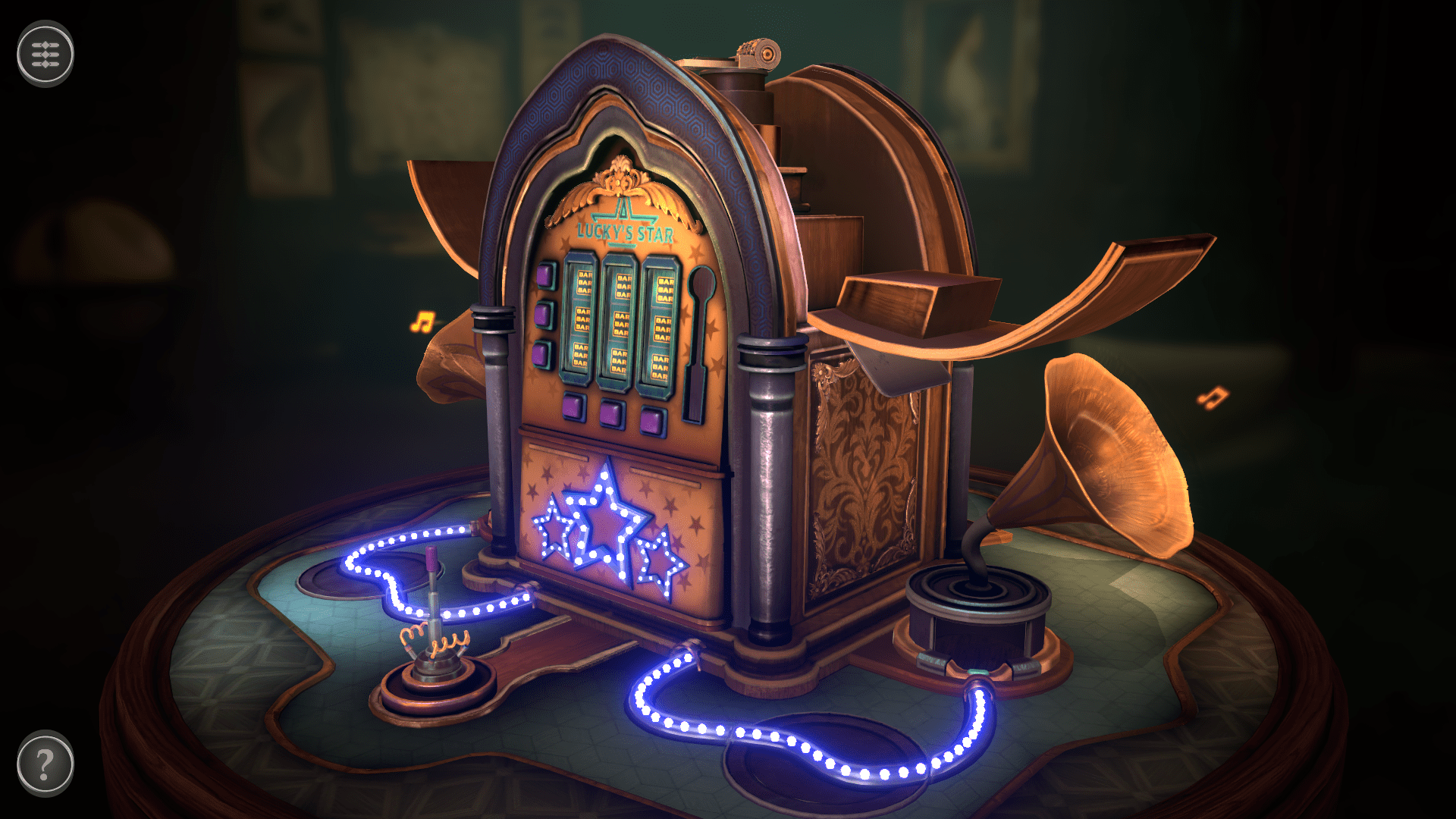
That desire was certainly helped by Boxes’ presentation, which renders each box and gadget with a loving attention to detail. Sure, there’s the occasional muddy texture when you get close to something, but generally the presentation is really solid. It’s not a lie to say that I was sold on this game largely from the screenshots I saw of its many ornate boxes, and I’m happy to say that this extended into the play of it. Even after solving a dozen boxes, it was continually satisfying to watch gears turn, motors whir, and tumblers click into place. The audio design helps a lot with this; while it’s pretty minimalistic, it does put the sounds of the boxes front and centre, giving an almost meditative quality to solving each one.
The only slight disappointment is that sometimes the boxes veer full-on into the realm of fantasy, featuring lengthy corridors, internal rooms you can enter, portals to other dimensions, and so on. Now, to be fair, I imagine that all of the boxes in the game would be physically impossible (or at least improbable) to create in the real world. However, in a game that seems to revel wholeheartedly in the exciting tactility of physical objects, it took me out of the experience to have logic get thrown out the window periodically. Sure, it allowed for some flashy moments, but when objects are getting summoned in from other realities, it kind of makes the whole puzzle box thing feel a bit trite in comparison.
Lastly, there’s the plot, which I’ve saved mentioning until now due to how inconsequential it is. Certain puzzle boxes have letters in or around them which gradually tell the story of a scientist creating a robot named Aurora. The game positions itself as one in which you slowly unravel the mystery of Aurora, but it really just fizzles. It’s not that the writing is bad, but each new box already presents an exciting mystery that far eclipses any that the letters might be trying to build up. Plus, the narrative concludes on a “were you actually the bad one all along?” note that feels tonally dissonant from the laid-back gameplay while also being entirely predictable if you’ve been reading each letter. The best thing I can say about the plot is that it’s unobtrusive and easily glossed over so you can get back to the puzzle solving at hand.

Boxes: Lost Fragments is a solid puzzle game that succeeds not out of any real sense of novelty, but just by offering sequences of engaging enigmas and compelling conundrums until you reach the end of its brief runtime. A few of the puzzles felt more irritating or luck-driven than others, but overall it was a smooth and pleasant experience to play through, lacking a lot of the friction that can sometimes be associated with more demanding entries in the genre. That could be a detriment to some people: if you’re looking for a real brain-burner, this isn’t it, and if you’re in it for the plot, well … this really isn’t it. Yet for anyone looking to puzzle their way through some truly gorgeous little brainteasers, it’s well worth taking a peek inside Boxes: Lost Fragments.
8/10
 Olive's Game Garden