Developer: Bubby Darkstar
Publisher: NoQuarter
Played on: PC
Release Date: July 10, 2025
Played with: Mouse & Keyboard
Paid: $0 (Key provided for review by Keymailer)
It feels like it’s been a while since I’ve played a good ol’ straightforward first-person shooter. The last one I reviewed is certainly a distant memory: that honour goes to Mothergunship in 2019, which was forgettable then and definitely hasn’t improved with time. It’s strange too, because shooters in general are a genre I tend to enjoy; I spent uncountable hours playing various Halo games in single and multiplayer as a teenager, moved on to Warframe in university, and have more modern releases like Robocop: Rogue City and Warhammer 40,000: Boltgun sitting in my Steam backlog. Maybe it’s just that recently I’ve been more invested in narrative-centric (see: the several visual novels I’ve covered in the last year) and cozy games (Mika and the Witch’s Mountain and Tiny Garden both jump to mind) over the traditionally “shoot first, ask questions later” experiences of many shooters. Then again, perhaps that expectation has been clouding my judgement all this time, because while Shooty Shooty Robot Invasion is thoroughly a game about shooting stuff (I think it’s illegal to put “shoot” in your title twice and not be), it surprised me with how much of a story it actually wanted to tell.
Shooty Shooty Robot Invasion starts out with a bang: Earth is experiencing a global invasion by intergalactic robots, and nobody seem to care! How could this be? Well, it turns out the reason for the general population’s indifference is pretty simple: the robots have actually only invaded Califlorida, and who really gives a crap about Califlorida? That question is quickly answered when — after some humorous banter and the borrowing of a pair of pants — Shooty (the game’s protagonist) is dropped into the fray by her commanding officer with the goal of stopping the mechanized invaders once and for all. At least, that’s the broad objective, but technically Shooty’s mission is to shoot all the robots, gather intel on the invasion, help out the people of Califlorida with whatever asinine requests they may have, and find the missing members of her squad (Force Of Robot Killers; FORK for short) to get them back in the fight. Oh, and pick up her boss’ laundry from the local laundromat because “that weird lady who talks a lot is there and I don’t want to listen to her weird crap anymore!”
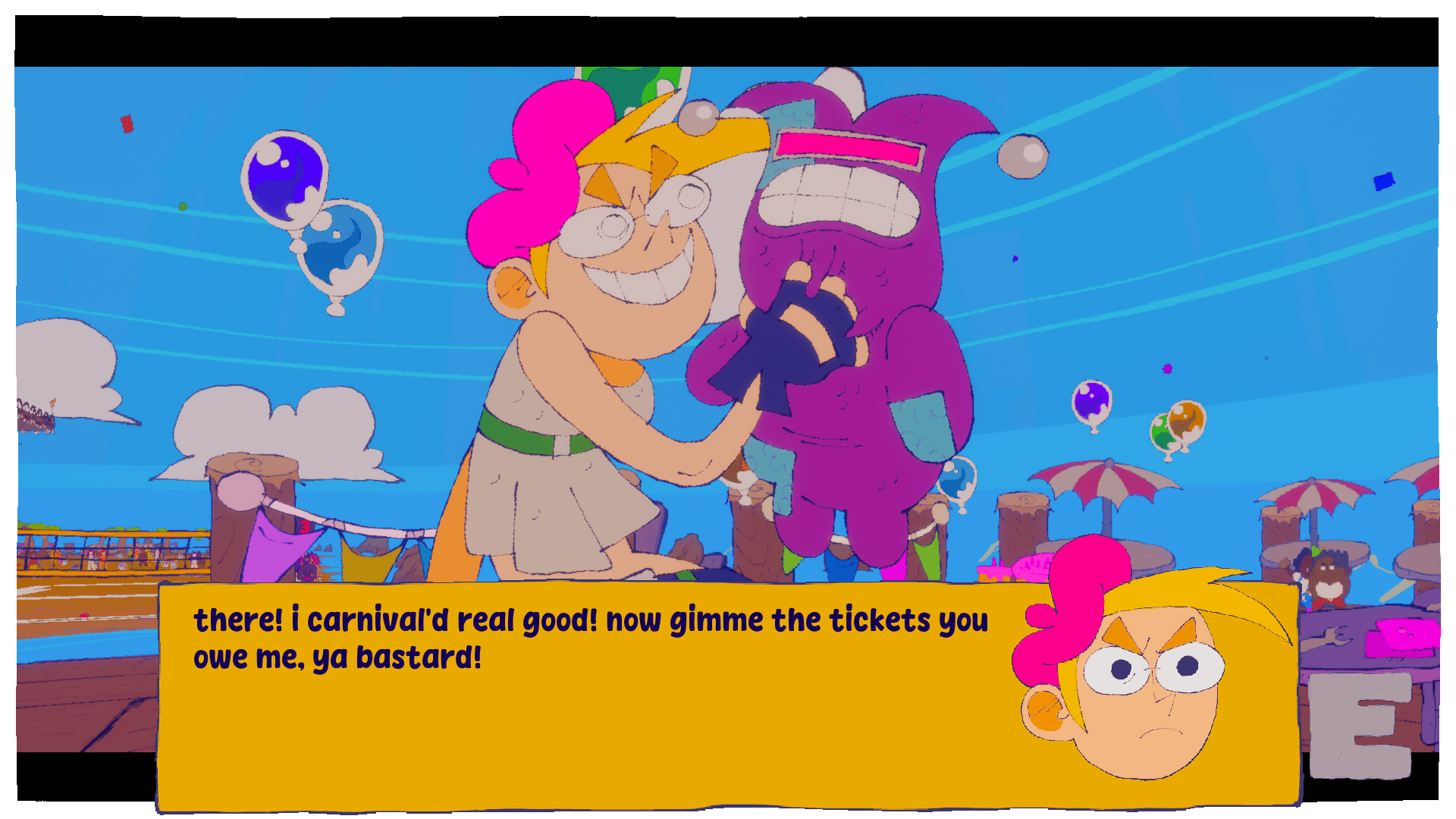
If it’s not clear by now, Shooty Shooty Robot Invasion‘s tone is like a comedy-centric punk rock album. It’s over the top, absurdist, and crass, and it oscillates between being deeply cynical and laugh-out-loud funny like it’s going out of style. One minute you’re listening to someone lament how cruel and depersonalizing their job is, and the next you’re playing a game of beach volleyball with a robot … and then blowing them up out of spite when you inevitably lose. I will say that the game likes to delve into a lot of darker humour, with plentiful jokes about suicide and other self-destructive behaviours appearing throughout its runtime. I’m actually surprised this isn’t mentioned in the content warnings on the Steam store page, because I could see it easily being triggering for some players; I know there were several that elicited more of a nervous laugh from me than a genuine guffaw. There are also a lot of typos to overlook while reading through the cutscenes and your various interactions with NPCs, but the thrill of not knowing what ludicrous direction each conversation will take does an admirable job of offsetting this concern. I was surprised to find out that the laundry list (pun intended) of missions given at the outset was only the task list for the first of the game’s six levels, and things only get more ridiculous from there. There’s intrigue, betrayal, a dramatic black-and-white flashback, and even romance, all adding up to a game that remains compelling to the end instead of simply being a series of strung-together goofs.
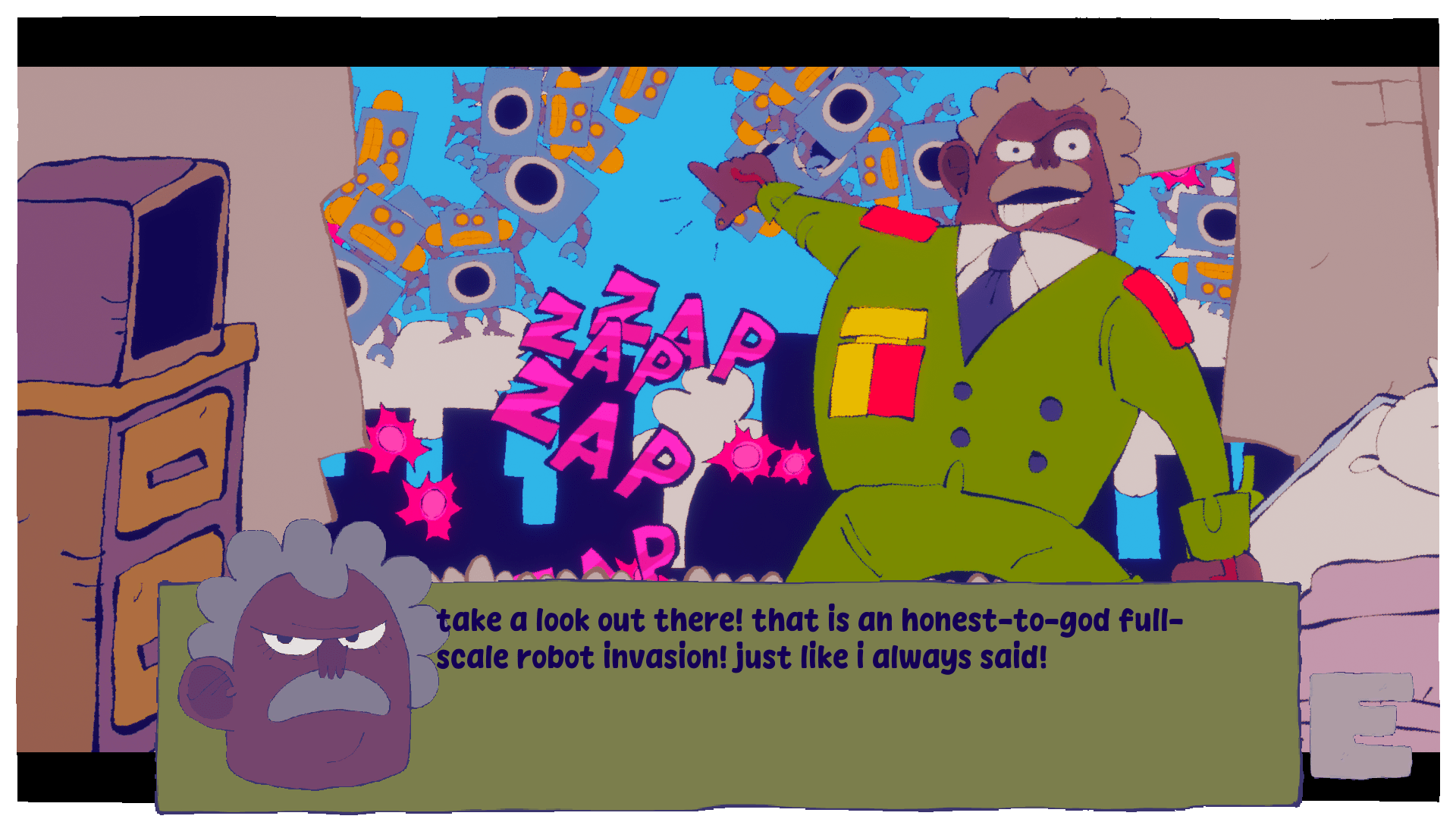
There are a few points that take the writing in Shooty Shooty Robot Invasion down a peg, though, namely in its use of some outdated language. For starters, the game consistently refers to Earth as “Earf”, which I would have assumed until recently was just a humorous misspelling; in all likelihood, this is what the developers intended. Unfortunately, this naming has something of a charged history, beginning life as a meme inspired by Will Smith’s famous “Welcome to Earth” line in the film Independence Day. This deliberate mispronunciation has since been flagged as racist, perhaps most notably in this 2016 article from GQ. Since the article is paywalled, I’ve included the relevant quote below (note that I can’t seem to find a working link to the podcast episode mentioned, but I struggle to imagine GQ would have invented a podcast episode wholecloth for this one-off article):
Let’s get the obvious out of the way first: Yes, the persistent belief that Smith says “Welcome to Earf” (Or “Erf,” or “Urf”) in Independence Day is racist. I don’t think it’s going out on a limb to say no one would quote the line as “Welcome to Earf” if Captain Steven Hiller wasn’t played by a black dude. The podcast Yo! Is This Racist?, which weighs in on whether or not things are racist, is pretty unequivocal in a 2014 episode focused entirely on the misquote. “I think it’s just like, one of those things where you just poke at this insistence: ‘Look how black people talk’,” says host Andrew Ti. “And it’s just like, motherfucker, he doesn’t even say it in the movie! He says Earth! It’s just, like, so insidious and widespread.”
Similarly, there’s a point partway through the game where a character’s high school flashback includes a bully repeatedly calling them and the things they do “gay” as a pejorative. Don’t get me wrong: as someone who grew up when this sort of thing was the norm, it certainly doesn’t feel out of place for this sort of flashback, and the person using the term is clearly framed as being an asshole. That doesn’t change the fact that it came off as pretty unpleasant in a game that otherwise seems to celebrate queerness, individuality, and so on. Maybe if the term was used elsewhere in a more positive context it would offset things, but as it stands, it sort of felt like getting flashbanged.
I should be clear: I don’t know the background of the game’s developer. Obviously, if these bits of writing are coming from a black, queer individual, they hit a lot different compared to coming from a cis-het white guy. That being said, I feel it necessary to mention that they rubbed me the wrong way, if only from the perspective of normalizing this sort of language.
However, I have to say that while the writing in Shooty Shooty Robot Invasion is excellent overall (ignoring the aforementioned issues), the underlying story it’s telling leaves something to be desired. While I did appreciate the twists and turns and hilarious situations the characters found themselves in, when it came down to what it seemed to be trying to say, it fell a little flat. Maybe I’m being pretentious here, but when a game comes out in 2025 proudly proclaiming during start-up that it was made without the use of any generative AI, and the game itself features a looming megacorporation at its centre and is about destroying innumerable hordes of robots … well, it’s hard not to draw parallels between the game and reality. And at times, Shooty Shooty Robot Invasion does do this, talking about things like robots taking people’s jobs and massive corporate layoffs at the ever-changing whims of uncaring CEOs. But often it simply brings these topics up and sort of leaves them hanging there without actually taking a firm stance.
At first, the members of FORK want to destroy all the robots, then they’re suddenly swayed when the robots can allegedly provide back rubs and start taking over ordinary jobs they wouldn’t want to do (ignoring the fact that — in the real world — such jobs are critical to the livelihoods of many), and then they kind of flip-flop back once it becomes clear that the robots suck at doing the jobs they’re replacing? They mostly just seem upset they can’t get a good burger anymore, rather than feeling for the people being affected by the crisis. Similarly, when a CEO lays off all their employees purely over their own inflated ego, it feels like it should be a darkly cynical reflection of the unstable reality of working in the modern games industry (or most industries, really). Instead, all the laid-off workers start celebrating because it turns out their work was causing them untold misery … so I guess it’s okay that they’re now all unemployed? It’s a weird paradox that Shooty Shooty Robot Invasion finds itself in: its fiercely independent spirit and devil-may-care attitude had me assuming it would pull no punches when it came to discussing the unmitigated greed and lack of foresight so prevalent in today’s corporate culture, yet in practice it regularly felt like it was running some level of defense for those concepts, if not outright capitulating to them.
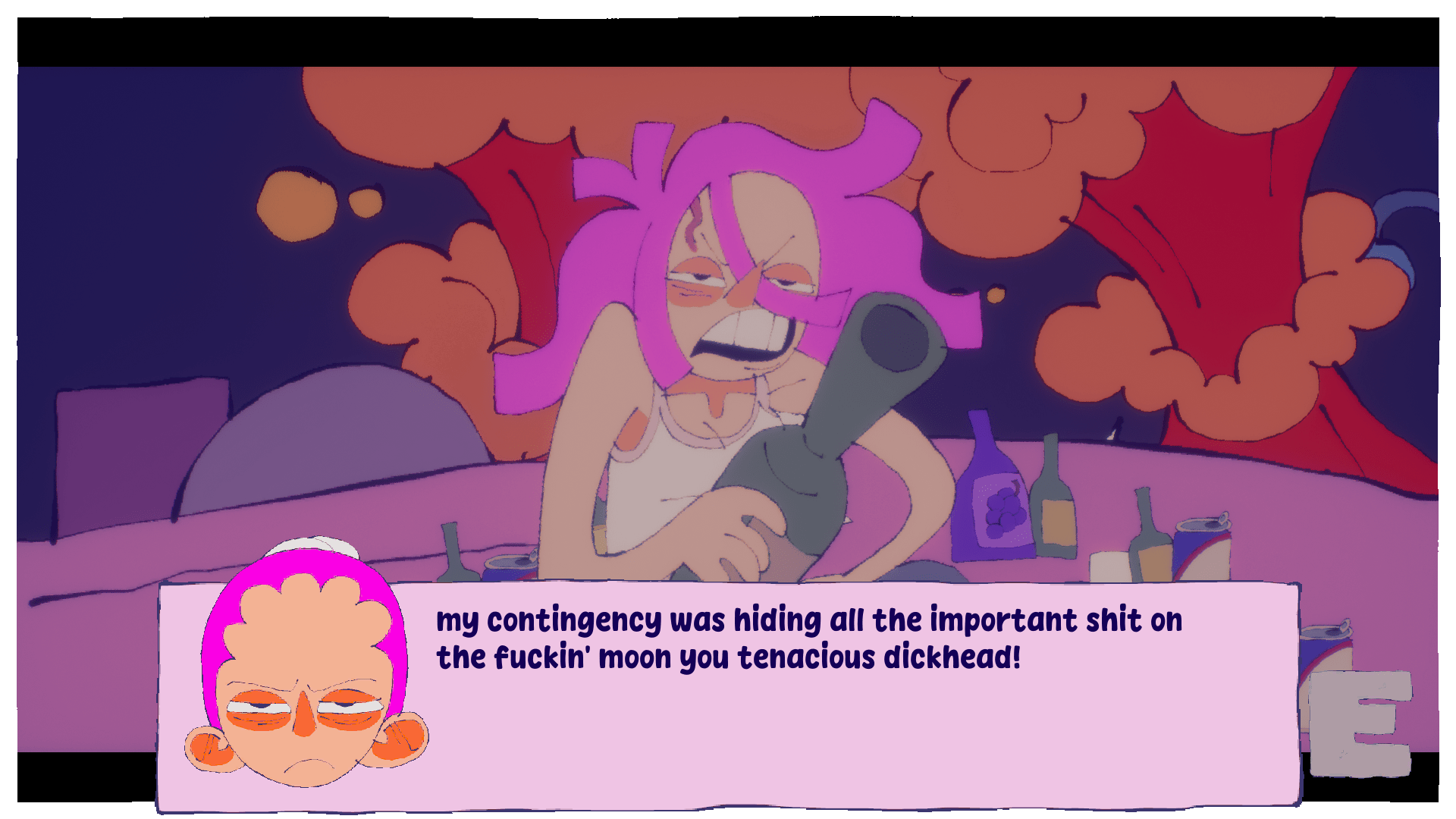
This all culminates in an ending that felt like a pretty big letdown. I’ll discuss spoilers for the game (and the film The World’s End) in this paragraph and the next, so feel free to skip ahead if you want to avoid those. To summarize, the actions of Shooty and her cohorts end up triggering something of a technological apocalypse, and the conclusion flashes forward a number of years to the gang living in a Fallout-esque world. Some people have mutated (including one of Shooty’s friends becoming a giant lizard), and the city they once inhabited has been replaced with a blasted hellscape of crumbling buildings. The surviving members of FORK are still eking out a decent existence amidst the rubble, but it’s unquestionably a drastic change from the modern conveniences they were accustomed to when the story opened.
The whole thing feels cribbed from one of my favourite comedy movies: The World’s End, which similarly ends with a tech blackout that sets humanity back to simpler times. Ironically, though, using the same premise for its conclusion doesn’t pan out as well for Shooty Shooty Robot Invasion. Whereas The World’s End uses its ending to reinforce its examination of how people choose to grow and mature (or not) in the face of both ageing and an ever-changing world, Shooty Shooty Robot Invasion sort of just uses it as one more escalation in its string of kooky events. It doesn’t really feel like it builds off any themes or messages the game previously established, outside of being yet another absurd situation in a game chock-ful of them. Additionally, it has the game’s B-plot (the story told by the side missions, which involves uncovering evidence of an impending alien invasion) start to converge with the A-plot, only to have both just … stop. The alien invasion is imminent, and by destroying all the robots, Shooty and co. have seemingly destroyed the only hope of stopping it, but then years pass without any notable events. And sure, the aliens do show up at the very end with plans to take over Earth … but then they accidentally start crashing their ships into each other as the heroes look on in disapproval. For a game that spends much of its latter half continually getting bigger, bolder, and more bonkers, it all ends up being pretty anticlimactic.
That brings me to the gameplay, which is typically the most important area in shooter games. I have to say: Shooty Shooty Robot Invasion didn’t make the best first impression on this front. Immediately after the story’s introduction, I was hurled onto a city street without so much as a pop-up to explain the controls. Robots immediately descended on my position and started attacking, and I died shortly thereafter while trying to get used to the camera sensitivity and narrow field of view. Strangely enough, there were no robots in sight when I respawned, which had me wondering whether them pouncing on me right off the bat was some sort of glitch. However, my first plan was to go into the options menu to check the controls and adjust some settings.
Unfortunately, the options on offer are pretty sparse: there’s no key rebinding (though the control scheme present didn’t have me itching to do so), no field of view adjustments, and no graphical settings whatsoever beyond switching between fullscreen and windowed modes. In fact, the only gameplay-specific modification that can be made is adjusting the camera sensitivity, and that turned out to be a whole can of worms. There are separate sliders for horizontal and vertical sensitivity, each of which goes from -1 to +1 with several snap points in between. Initially, both sliders were set a little bit above 0, and so my first thought was to set each to 0 to get a feel for the baseline camera sensitivity. I hopped back into the game … and I couldn’t move the camera at all. It turns out that setting either slider to 0 will completely disable camera movement along that axis, effectively rendering the game unplayable. And with that in mind, you may have now guessed the purpose of the -1 to 0 range on each axis: each value has the same sensitivity as the opposing positive value, but with the camera controls inverted along that axis instead. Is it functional? Sure. But when camera sensitivity adjustments have become so standardized over the years to be two sliders combined with a checkbox for each that enables and disables camera inversion, it really makes me wonder why the wheel was reinvented here. Maybe I just don’t have a good sense of humour, as one of my friends thought the whole thing was funny and played into the goofy nature of the game. In general, though, I like options menus to be simple and functional: I’m here to play and enjoy a game, not get bogged down fiddling with menus and figuring out how the settings actually impact gameplay.
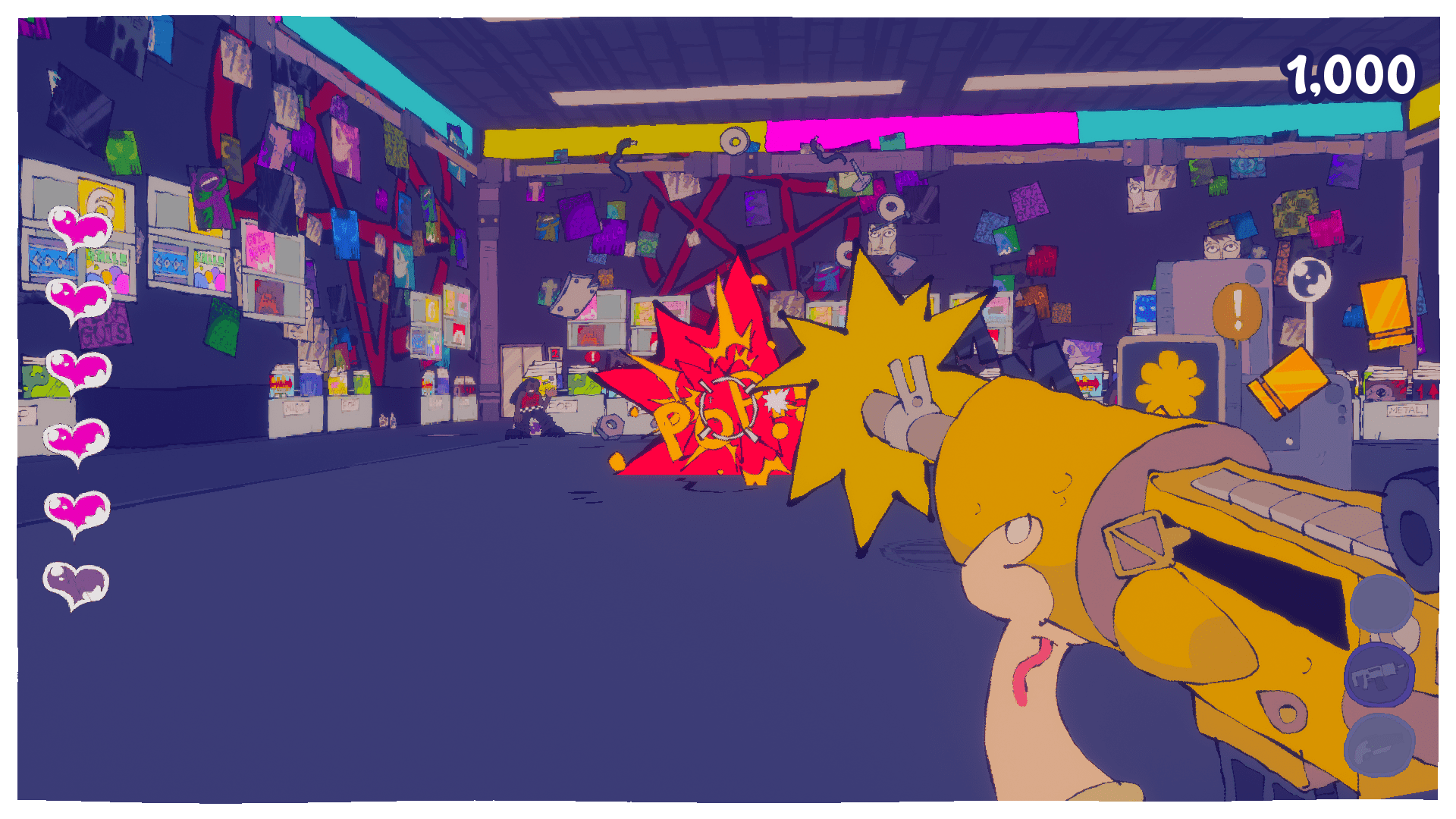
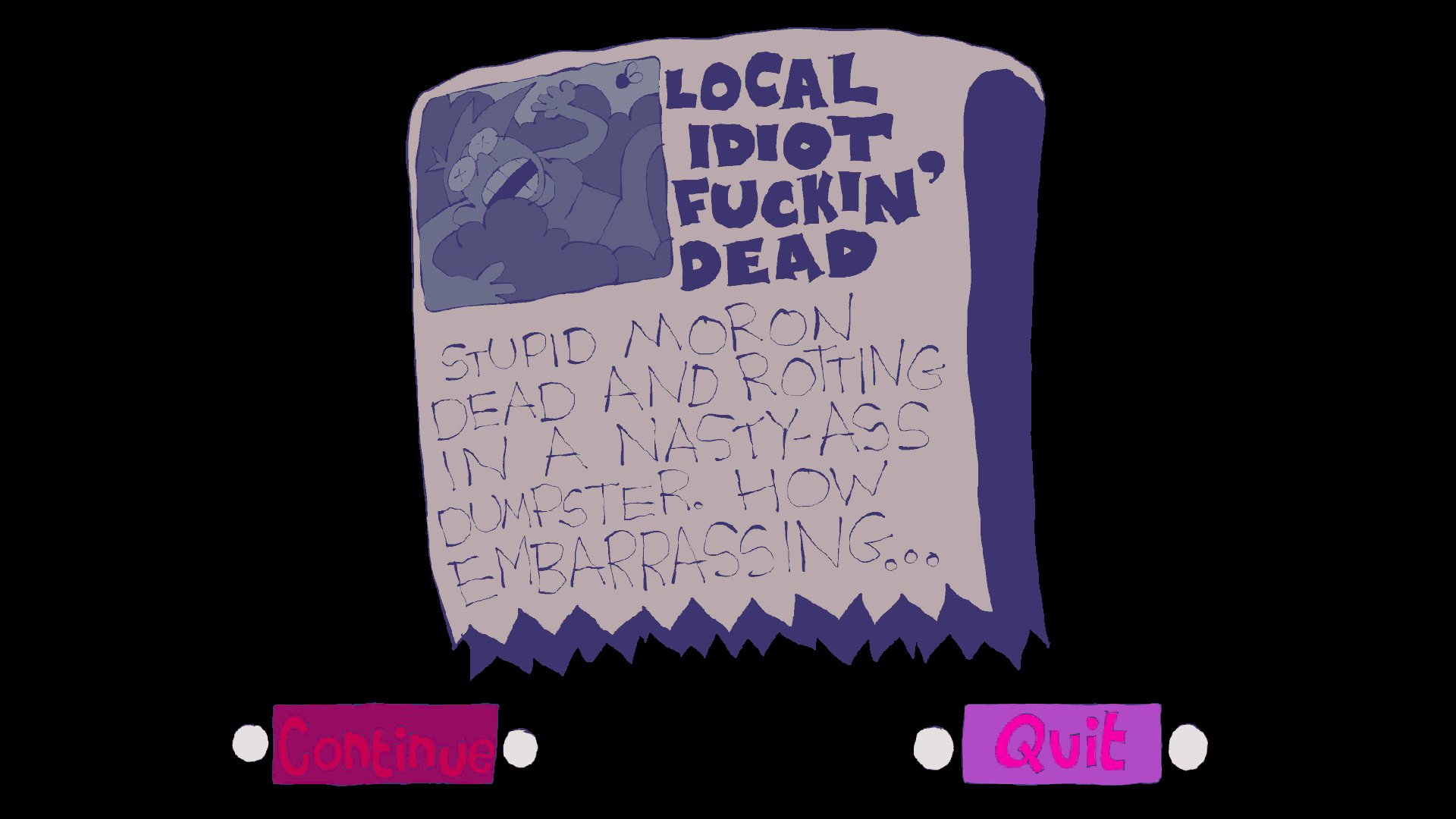
However, once I got into the swing of things, there was a marked improvement in my experience with Shooty Shooty Robot Invasion. The weaponry lacks a lot of the punch associated with many modern shooters, but it leans into the frenetic pace much of the combat takes on. Enemies regularly rush you or hurl countless projectiles your way, and Shooty’s ability to do a short-range dash with effectively no cooldown on it becomes an invaluable asset in your rampage. The way in which robots spawn in and randomly bounce around can make it pretty easy to get hit from off-screen, but your health pool is quite forgiving from the jump and fully regenerates after every fight, so the difficulty never got overbearing for me. Not to mention that once again: mobility is your greatest friend, allowing you to quickly duck out of danger when caught off-guard. And in a weird way, the game sort of incentivizes you to die at least once per level, as doing so “rewards” you with a humourous, unique death screen that mercilessly mocks you for being so stupid as to die.
I will say that when it comes to the gunplay, not all the weapons are created equal. The double-barreled shotgun can theoretically be satisfying to use, but in practice it requires you to get really up-close and personal in battles that are far too chaotic to make that a viable option. Meanwhile, the katana covers a lot of your field of view each time you swing it, making it incredibly difficult to aim the projectiles it fires and simultaneously extremely easy to get hit while doing so. Thankfully, the game doesn’t railroad you into fighting with either of these weapons (both are secondary options in the levels they appear in), but it’s nonetheless a bit disappointing to have two options that should feel really cool and punchy to use instead be clunky and frustrating.

On the bright side, there’s some solid variety added as you progress. The first couple levels are pretty straightforward affairs: explore the area, talk to NPCs, and complete objectives, including taking down each of the robot commanders (boxes that — when interacted with — lock you into a small area while you defeat a few waves of their cronies) and the level’s final boss. Just as you’re getting comfortable with this routine, though, Shooty Shooty Robot Invasion changes things up. For instance, level three is mostly about talking to NPCs and gathering intel, while level four strips away all your weapons and forces you to fight with your bare fists. The latter fundamentally recontextualized the dash mechanism too; where once I was using it solely for evasive purposes, now it was also great for quickly closing the distance between myself and my foes. Not to mention that each level includes some interactions off the beaten path that lead to secret boss battles and flesh out the game’s B-plot. It’s these twists on the formula that keep the gameplay fresh and interesting throughout the roughly eight- to ten-hour runtime.
Less consistently fun are Shooty Shooty Robot Invasion‘s occasional deviations away from action and combat. The first two levels both feature platforming sections, and the controls simply aren’t quite up to the task. Pressing jump while in the air triggers a dash punch move, which ends in a height-boosting uppercut if you hit something. Unfortunately, it doesn’t give you much momentum control and had me overshooting my target on more than one occasion. On the other hand, the standard dash can be more precise, but chaining them together doesn’t always work; there’d be times where I was mashing right-click and dashing on basically every press, and others where the game would seemingly drop a bunch of inputs, causing me to come up short and fall. The upside is that the only punishment for falling in each of these segments is having to start the platforming challenge over, but it nevertheless grinds your momentum to a halt.
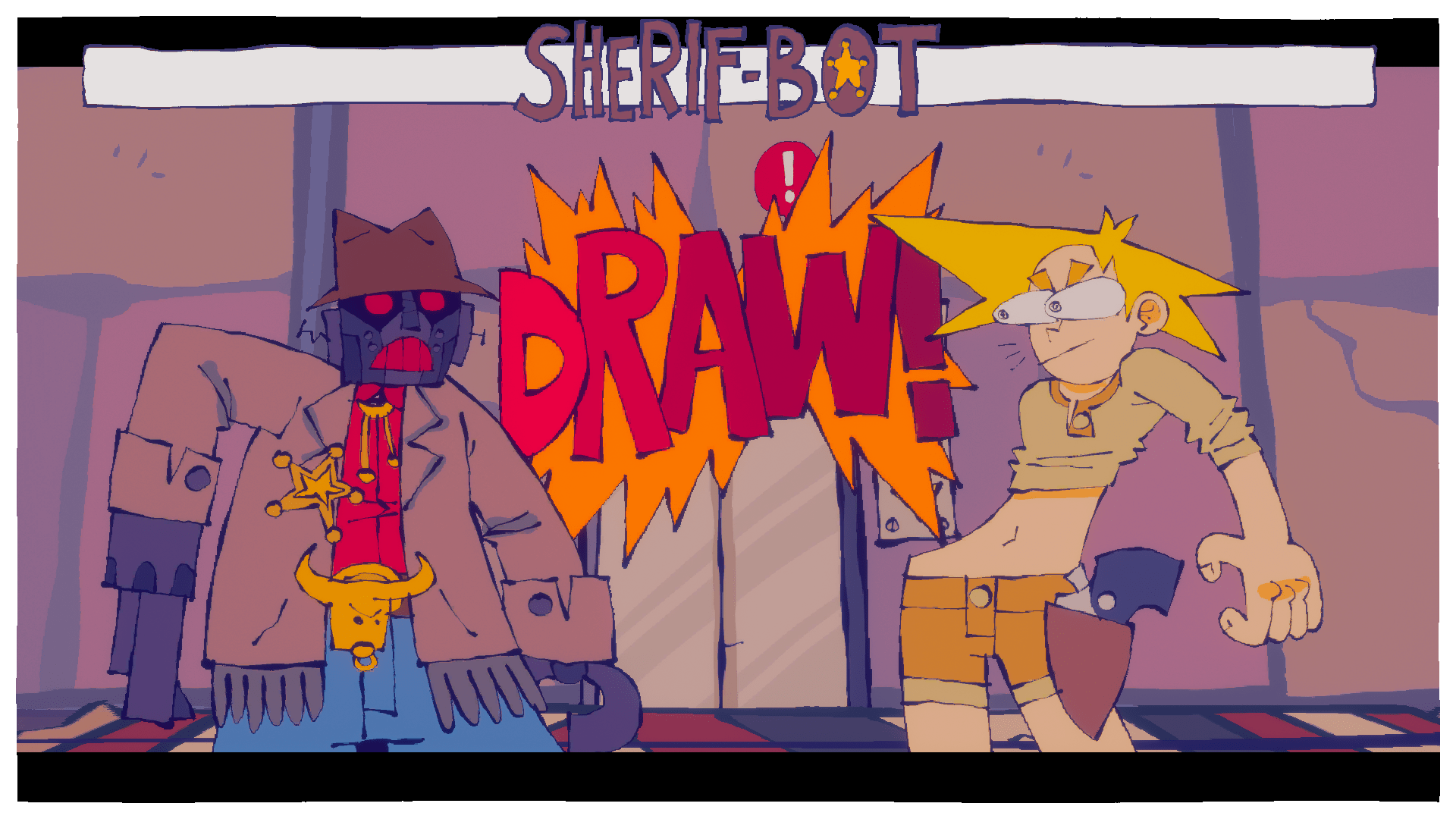
Shooty Shooty Robot Invasion also periodically dabbles in minigames, whether it’s doing some fishing or playing an old arcade fighting game, but these similarly come up lacking. The main culprit here is a lack of clarity around the controls and mechanisms. Even with the game giving some direction on how to do the fishing game it still took me several attempts to figure it out, and the fighting game throws you in with absolutely no guidance whatsoever, to the point where it wasn’t until halfway through losing it that I realized I had agency and it wasn’t a scripted sequence. I still lost, and I have no idea what happens if you win (or if it’s even possible to do so), but it was still a major bummer.
Additionally, there’s some technical issues and odd choices that can make exploring the world and chatting up NPCs more cumbersome than it should be. For context, each interactable character and object is marked with an icon, helpfully giving you an idea of where to go next. Plus, these icons are colour-coded, with blue representing non-essential dialogue, red for mission-specific stuff, and green for secrets. This is a game where talking to characters multiple times often reveals new dialogue, and the exclamation points helpfully remain until you’ve exhausted all that a particular individual has to say. At least, usually. There were a few times where the icon remained even though the character was simply repeating the same line over and over each time I spoke to them. To make matters more confusing, in some instances this happened with red-marked characters, making me wonder why I wasn’t getting more plot-relevant information out of them. In these cases, it turned out they were characters who didn’t become important until later in the level. In theory I’m not opposed to visually calling out these characters so the player remembers them when the time is right, but it really ends up being a confusing user experience in the moment.
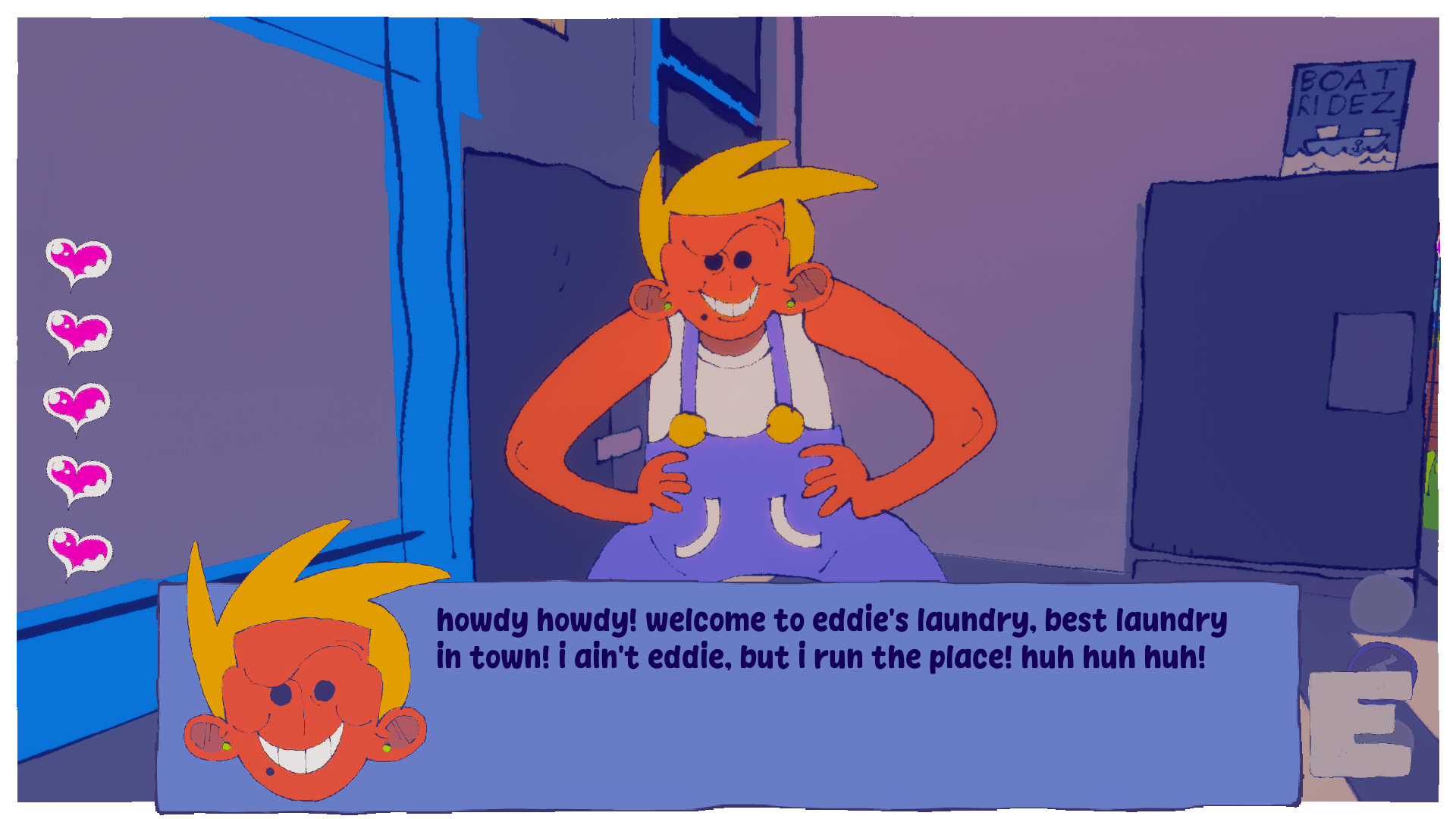
It’s also irritating how reloading the game resets (at minimum) all the blue-marked NPC conversations you’ve had in the level, even if a save has occurred since you had them. This means that if you want to make sure you’ve interacted with everyone but have to quit partway through a mission, it can be a hassle to figure out who you’ve already talked to. Plus, sometimes there are little side objectives related to conversing with certain characters (though it’s unclear whether these actually have any bearing on the narrative), so if you want to ensure you’ve got all your bases covered, you’re pretty much forced to mash through each conversation all over again each time you reload. It means that the game is best played in bursts where you fully complete your current level before quitting; thankfully, with each level running between an hour and an hour and a half, working around this isn’t too burdensome. At least there are no dialogue choices to make, so if you do have to repeat dialogue, you’re safe to gloss over it all without worrying about mucking up Shooty’s moral compass or something.
I’ve talked about the strong writing and energetic gameplay in Shooty Shooty Robot Invasion, but arguably the aspect of it I found most impressive was the art. With entirely hand-drawn assets for its characters and textures, the game looks like a punk rock zine come to life, and certainly unlike most other games on the market. Ironically, I was a bit bummed out when I started exploring the game’s first area and saw how frequently NPC sprites were reused (sometimes right next to each other), though I could appreciate that the volume of characters on display meant that more variety would be pretty unsustainable for a small indie project. However, after moving to the next level and realizing that the crowds were populated with an entirely new slate of characters, my reservations melted away. The game’s store page markets it as having “thousands of hand-drawn sprites”, and having played through the whole thing, I believe it. While it’d be easy to reuse the same designs throughout the game, the main characters go through numerous costume changes, each of which utilizes a whole new slate of assets to bring them to life. Hell, aside from the repeated NPC sprites, the only time I recall seeing sprite reuse is with Shooty’s post-katana-slice pose during cutscenes, and that’s a deliberate choice to invoke the classic “single-stroke battle” trope. Simply put: Shooty Shooty Robot Invasion is a visual feast, and if you find the art style even somewhat appealing, I can pretty much guarantee you’ll have a great time exploring all it has to offer.

Shooty Shooty Robot Invasion is by no means a flawless game. Its story feels too scatterbrained to be truly resonant, its deviations from gunplay frequently feel half-baked, and some weird technical and design issues hamper parts of the experience. However, when it’s firing on all cylinders, it’s a truly wild ride unlike most other games I’ve played. The writing is consistently entertaining, throwing so many goofs and gags at you one after another that even if the occasional one misses the mark, it’s pretty much a guarantee it’ll be followed up by many more that land. Combat is hectic and fun, channeling the energy of modern movement shooters without getting bogged down in complex mechanisms, and the frequent change-ups to the gameplay formula keep things from getting stale. And the presentation is truly exceptional, packing in an astounding array of hand-crafted assets, especially for a smaller indie game. It’s easy to feel deeply cynical about video games these days; at the very least, the absolute mess that is the AAA space frequently makes me feel like the whole industry is doomed. But then a game like Shooty Shooty Robot Invasion comes along. It’s weird, quirky, and off-the-wall insane, but I can’t help loving it in spite of its issues. I’m sick to death of generic sci-fi shooters clogging the market, so I think it speaks volumes that — even though it’s fundamentally a game about mowing down hordes of robots with an assortment of weaponry — Shooty Shooty Robot Invasion is one of the most delightfully creative games I’ve played this year.
8.5/10
 Olive's Game Garden