So, 2025, huh? Hell of year, even just limited to gaming. Peak was a smash hit co-op adventure that proved there truly is no better comedy than a group of friends trying (and usually failing) to complete a task together. Blue Prince became a critical darling thanks in large part to its creative twists on the rogue-lite formula and never-ending mysteries. Date Everything took the visual novel and dating sim genres to absurd new heights, asking fever-dream-tier questions like, “What if a dust bunny was a literal girl in a Playboy Bunny suit and you could ask her for a smooch?” And all the while, this bumper crop of new IPs stood in stark contrast to the big budget franchise space, be it Monster Hunter: Wilds being so poorly optimized that even high-end rigs struggled to run it well, Civilization VII introducing questionable new mechanisms that left many players scratching their heads, or Pokemon Legends: Z-A seeing fans lamenting its derivative design and blasé visuals as needless cost-cutting and time-saving measures for one of the biggest multimedia properties on the planet.
Here’s the kicker: I played none of those games! Some of them certainly made it onto my wishlist, and I watched other people play a few, but as a fully independent games journo with far too many other hobbies demanding my attention (and money), my 2025 was defined by the smaller, more niche titles, even in the indie space. Plus, things have been so busy as of late that several releases from later in the year fell by the wayside, despite being in my library. Looking at my backlog, there are at least ten games that released this year that I wasn’t able to get to, which … uh … coincidentally is also the number of new releases I actually did play. All that is to say, this is going to be a much smaller-scale awards ceremony compared to the last time I did this — and I can’t believe I’m saying this — eight years ago. Also, small twist from the 2017 Olives: since the pool of games to choose from this year was a lot more limited, I’ve restricted myself to maximums of one winner per category and one award per game, mostly in the name of keeping this more interesting for me to write and for you to read. With all that faff out of the way, though, let’s get into it!
The “Bootleg Booker” Olive for the Best Writing
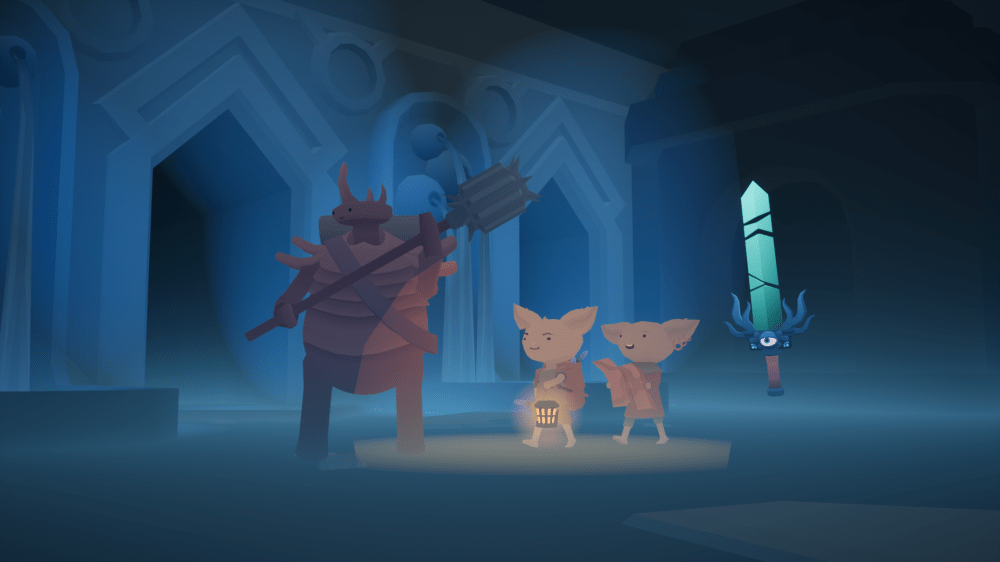
Wyrmhall: Brush and Banter
It wasn’t until I sat down to write this award entry that I had a revelation as to why Wyrmhall‘s writing resonated so strongly with me: it gives me the same vibes as Legends & Lattes, which is without a doubt one of my favourite novels. Both works are dripping in cozy fantasy vibes, and have healthy dashes of mystery and humour to keep things interesting. I’d say Wyrmhall dips into comedy a bit more frequently, but that’s not at all to its detriment. Despite playing it early in the year, the mere act of writing down its name brought a smile to my face, along with memories of sentient swords, scheming spiderfolk, and of course, goblins calling everyone “chumpo” and generally being snarky little bastards in the best way possible. It’s one of those games that I’m tempted to show to some of the non-gamers in my life, just because I think they’d get a kick out of the fun story and quirky cast. Whether you’re in need of a mood boost or just want a wholesome narrative to go through in an afternoon, Wyrmhall: Brush and Banter is an exceptional option.
The “Uno Reverse” Olive for the Game That Changed My Mind
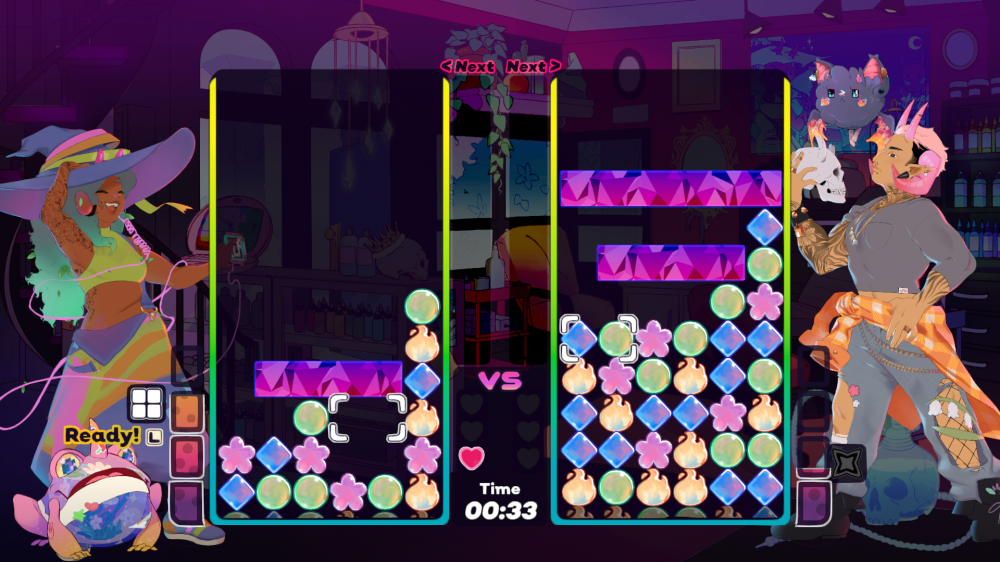
Spirit Swap: Lofi Beats to Match-3 To
I didn’t touch on this in my review, but historically I haven’t been particularly interested in “action puzzle games”; that is, games like Tetris that certainly have a puzzle bend to them, but require you to constantly make snap decisions under a time crunch if you want to be successful. That all changed with Spirit Swap, which takes the classic match-3 puzzle game formula and infuses it with an engaging story and chilled-out music. It’s honestly kind of amazing to me how adding just a few extra wrinkles to an established formula can make it more attractive to newcomers, but without a doubt, this is exactly what Spirit Swap achieves. To be clear: I wouldn’t say it made me particularly skilled in the genre. I had to keep the difficulty turned down while playing, and head-to-head matches with a friend usually ended in a loss for me. But considering I still had a legitimately fun time with gameplay that I used to almost universally avoid, I still call it a huge win. Come for the cute gays, stay for the excellent spirit swappin’.
The “My Screenshot Button is Broken” Olive for the Best Aesthetic
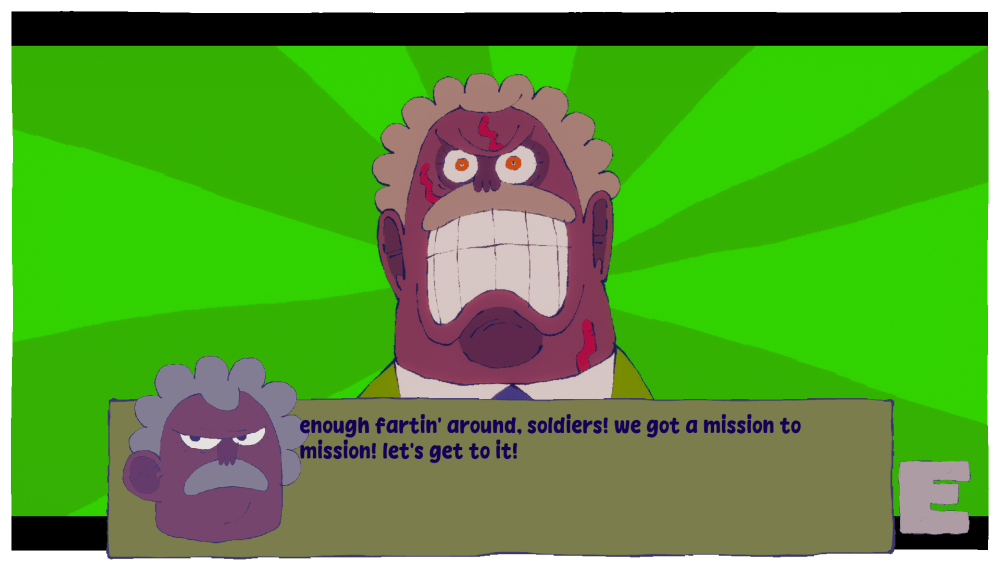
Shooty Shooty Robot Invasion
I had my qualms with Shooty Shooty Robot Invasion, but one area I struggled to fault it was the visuals. Its huge variety of character and environment assets (especially considering its small team and limited budget) brought every facet of its zany world to life, from the wacky characters down to the comic book-esque onomatopoeia effects for gunshots and explosions. The game simply oozes personality from every pore, and seeing how it would depict each increasingly ludicrous scenario was undoubtedly a driving factor in keeping me hooked on it. In a year that saw more development studios trying to incorporate generative AI elements into their games, Shooty Shooty Robot Invasion stands as a testament to the fact that the most electrifying, hilarious, and — simply put — best art will always be created by humans; those damn clankers can go to hell.
The “Jacking Into the Matrix” Olive for the Best Gameplay
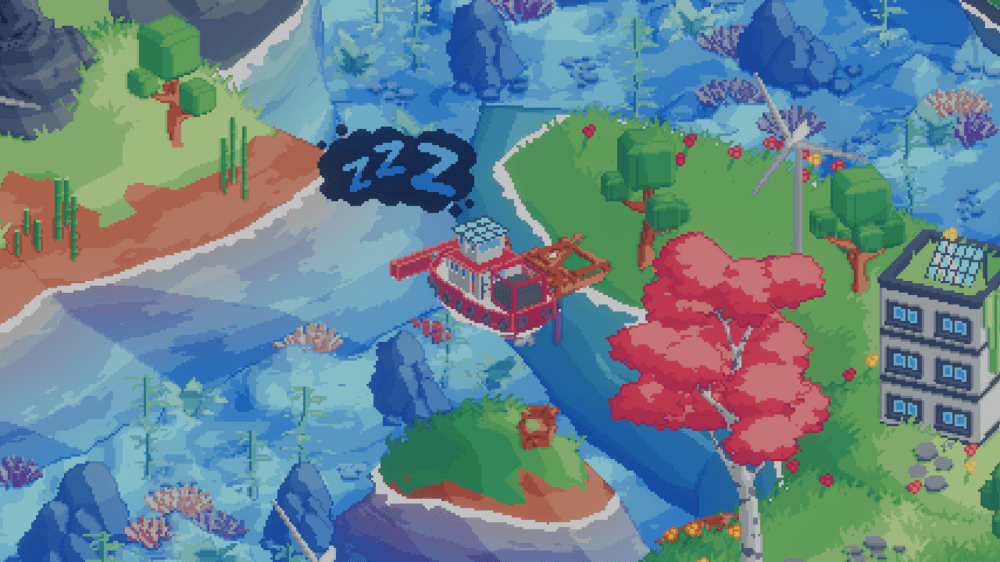
Spilled!
It can be tough to decide whether backing a crowdfunding project is worth it. I’ve been burnt enough times by poor communication, endless project delays, and at least one case of a company outright going bankrupt before delivering that choosing to take the plunge on a relative unknown can feel like a bit of a risk, to put it lightly. Not to mention that most game projects don’t give you a ton to go on; sure, you might get some screenshots, gifs, and a short video in addition to the description text, but that’s not much when you consider everything that goes into creating a game and how much can change in the period between concept and release. Luckily, Spilled absolutely delivered on its core promise of providing a blissed-out experience where you clean up polluted bodies of water and rescue cute critters. Its simple mechanisms work in its favour, allowing the player to focus on navigating its environments, sucking up oil slicks, and wrangling trash without having to worry about things like complex boat maintenance or loading/unloading procedures that other, more simulation-focused games might feel compelled to throw in. Since Spilled is a pure gameplay experience (i.e. there’s no narrative to fall back on), it very much lives or dies on how enjoyable that gameplay is. And if you’ll indulge me a bit of metaphor stretching: the freshly-cleaned, unpolluted environments aren’t the only thing living once the credits roll on Spilled.
The “One You’ve All Been Waiting For” Olive for the Game of the Year

A Tithe in Blood
I mean, based on my review scores and what’s already been covered here, it really couldn’t be anything else, right? No other game this year stuck with me to the extent that A Tithe in Blood did. It’s a frequently distressing, emotionally-fraught read that had me white-knuckling my way through certain scenes, but that only speaks all the more to how effectively it weaves its tale of lovers across time and space. Its sympathetic depiction of Honoka is the crux of what makes it great. In a medium that has historically struggled with its portrayals of mental health and emotional distress, A Tithe in Blood proves that when the proper care and attention are given to how these topics are written, they can be incredibly powerful and affecting. Skimming over my review again, I used words like “beautiful”, “unflinching”, and “poignant” to describe my experience with it, and I wouldn’t take any of those descriptors back. Games are often spoken about in terms of how difficult they are; that is, how challenging it is to effectively perform the gameplay actions required to be successful. Being a visual novel, A Tithe in Blood is not a difficult game in this respect, but it doesn’t change the fact that it was without a doubt the most challenging game from an emotional standpoint that I played this year. But as has been the case with the other Studio Élan games I’ve played, A Tithe in Blood continues to show that they excel at handling these heavy topics in their games, creating memorable experiences that stick with me long after the credits roll.
And that’s a wrap on 2025 and the second ever Olives! I hope that you all have been having (and continue to have) a lovely holiday season, and here’s to fulfilling adventures, friendly faces, and — of course — lots of bangin’ new games in 2026! Good night, everyone!
 Olive's Game Garden